




Step into any well-built home gym and you’ll notice something right away.
It isn’t just the weights that make it feel powerful.
It’s the way everything has its place.
The floor is open.
The energy is focused.
The dumbbells aren’t rolling underfoot or stacked like firewood in a corner. They’re resting with purpose on solid steel racks.
There’s symmetry.
Clean lines.
Flow.
A rhythm to the space that makes you want to train harder, longer, and more often.
That’s not an accident.
It’s design.
It’s intention.
And it starts with the most overlooked yet foundational piece of any home gym setup: the weight rack.
More than a storage unit, the right rack transforms chaos into clarity. It protects your equipment, your floor, and your body. It tells your brain: this is where work happens.
And if you’re investing in rubber dumbbells, urethane sets, or plates that’ll last a lifetime, why toss them on the ground like an afterthought?
Let’s break down what matters. Because the weight rack you choose can either elevate your gym, or quietly sabotage it.
Why a Weight Rack is Essential in Your Home Gym (4 Reasons)
A weight rack doesn’t just store your dumbbells. It anchors your space, your safety, and your standards.
Whether you’re training in a sleek basement gym or a garage where every square foot counts, the way you organize your weights plays a critical role in both performance and longevity.
Here’s why a well-built weight rack isn’t optional; it’s essential.
Reason #1: Prevents Injury and Enhances Safety
Dropped dumbbells and cluttered corners aren’t just annoying, they’re dangerous. According to the U.S. Consumer Product Safety Commission, over 500,000 weight training injuries are reported each year, and many of them happen at home due to poor equipment setup or tripping hazards.
A dedicated rack keeps weights off the floor and out of walking paths. No more toe-stubbing, shin-bruising, or trying to deadlift a 50-pound dumbbell off a mat at an awkward angle.
Reason #2: Protects Your Equipment and Your Floor
Rubber or urethane coating only does so much if weights are dropped, dragged, or stacked carelessly.
Weight racks distribute mass evenly and allow dumbbells to rest in cradles designed to preserve shape and finish. This matters more than most people realize.
Over time, even premium weights can deform or crack without proper storage, especially on uneven surfaces or concrete.
It also protects your investment in gym flooring. Interlocking rubber tiles or foam mats will last significantly longer when free weights are kept elevated and stable.
Reason #3: Maximizes Floor Space and Improves Workout Flow
If your gym feels cramped, it might not be the space. It might be the storage.
A quality rack instantly transforms how you move through your workout.
No more stepping around a jumbled pile of iron.
No wasted time hunting for matching weights.
Just clean lines, clear zones, and energy that moves the way you do.
This kind of flow matters. In fact, research from the American Council on Exercise (ACE) shows that organized, clutter-free workout environments directly improve consistency, reduce mental friction, and increase perceived workout enjoyment.
Reason #4: Sets the Tone for a Professional, Purpose-Built Space
You don’t need a million-dollar gym to feel like a pro. You just need the right tools, arranged with intention.
A rack creates structure. It says, “This isn’t just where I work out—this is where I train.”
If you’re someone who invests in high-quality gear, your setup should reflect that. Not just for aesthetic appeal (though, yes, it looks clean and powerful), but because environment shapes behavior. And organized spaces are proven to improve focus and adherence in any routine.
According to a study published in Personality and Social Psychology Bulletin, individuals in tidy, organized spaces were more likely to choose healthy behaviors and stick with positive routines over time.
Recommended products
-
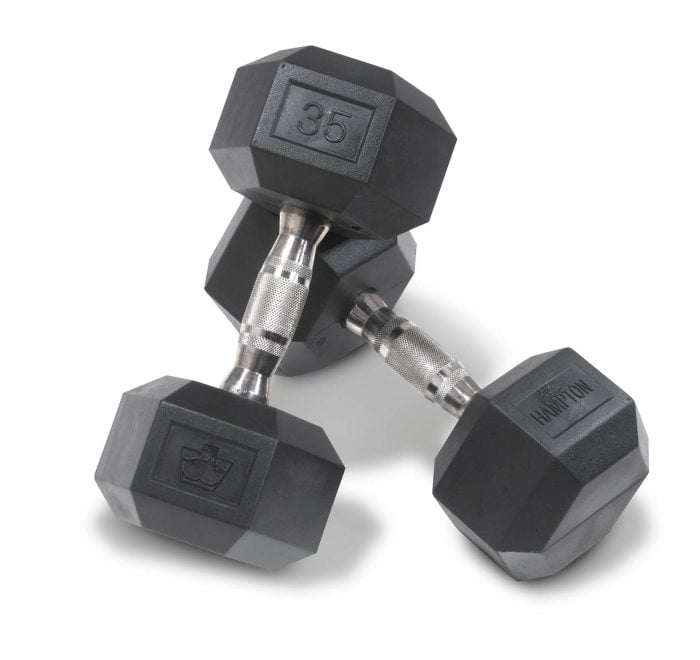
Hampton Dura-Bell® Urethane Dumbbells – Pairs
Price range: $34.00 through $914.00 -
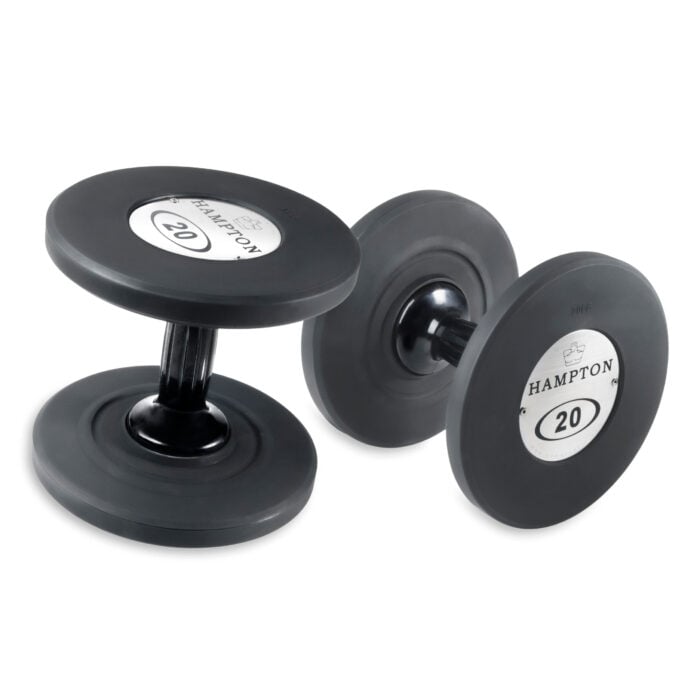
Hampton Gel-Grip® Urethane Dumbbells – Pairs
Price range: $206.00 through $1,454.00 -

Hampton Jelly-Bell® Urethane Dumbbells – Pairs
Price range: $66.00 through $268.00
Types of Weight Racks for Home Gyms
Not all weight racks are built the same, and they shouldn’t be.
The best rack for your setup depends on your space, equipment type, and how you train. Below, we break down the most common types of weight racks used in home gyms, what makes them unique, and who they’re best suited for.
Horizontal Dumbbell Racks
These are the classic three-tiered racks you’ll find in most commercial gyms. They’re ideal for storing sets of fixed dumbbells, from light weights to 100 lbs and beyond.
Best for:
- Home gyms with moderate space
- Lifters with full dumbbell sets (e.g., 5–50 lb or 5–100 lb)
- Anyone looking for maximum organization and accessibility
Hampton Highlight: The Dura-Pro 3-Tier Dumbbell Rack is built with commercial-grade steel and features anti-roll saddles to protect your dumbbells and your fingers.
Vertical Dumbbell Trees
These space-saving towers stack dumbbells upward rather than across, usually with a compact footprint that fits tight corners or small home setups.
Pros:
- Takes up very little floor space
- Great for lighter weights (under 30 lbs)
Cons:
- Limited weight capacity
- Not ideal for heavy training or larger dumbbell sets
Best for:
- Small apartments or garage gyms with tight space
- Beginners or HIIT users with lighter weights
Plate Storage Racks & Trees
Designed for Olympic or bumper plates, these racks feature horizontal or vertical pegs to keep weight plates off the ground and easy to access.
Options include:
- Horizontal plate holders
- Vertical plate trees
- Combo barbell + plate storage
Best for:
- Lifters who use barbells and plates
- Functional or CrossFit-style home gyms
- Spaces with rubber or concrete flooring
Pro Tip: A plate rack not only improves access, it also prevents unnecessary wear on plates and avoids warped rubber or bent bars.
Combo Storage Solutions
Multi-purpose storage racks are designed to hold dumbbells, kettlebells, medicine balls, and more—all in one system.
Best for:
- All-in-one training setups
- Athletes using mixed modalities
- Garage gyms with hybrid training zones
Hampton Highlight: The 3-Tier Kettlebell/Accessory Rack is a great option for cross-functional setups, offering wide trays and high capacity.
Wall-Mounted Weight Storage
When floor space is tight, go vertical. Wall-mounted racks and hooks free up square footage while keeping your gear easy to grab.
Pros:
- Saves maximum space
- Creates a clean, modern aesthetic
Cons:
- Requires proper installation and wall support
- Less mobile than floor-standing racks
Best for:
- Minimalist or small-footprint home gyms
- DIY or custom-built setups
- Lifters who prioritize clean design
Comparison Table of Home Gym Weight Rack Types
| Rack Type | Best For | Pros | Cons | Ideal Equipment |
| Horizontal Dumbbell Rack | Full dumbbell sets, mid-large gyms | High capacity, commercial-grade, accessible | Requires floor space | Rubber or urethane dumbbells |
| Vertical Dumbbell Tree | Compact gyms, light dumbbell use | Space-saving, budget-friendly | Limited weight range | Light fixed dumbbells |
| Plate Storage Rack | Olympic or CrossFit lifters | Keeps plates organized and easy to access | Takes up space, often single-use | Olympic/bumper plates |
| Combo Storage Rack | Hybrid home gyms, mixed tools | Versatile, holds multiple equipment types | Higher cost, needs more space | Kettlebells, med balls, dumbbells |
| Wall-Mounted Rack | Tight spaces, sleek design | Saves floor space, modern look | Permanent install, limited mobility | Lightweight or hanging gear |
6 Key Features to Look for in a Quality Weight Rack
Not all weight racks are created equal. And if you’ve ever tried to shove a 50-lb dumbbell into a flimsy, unstable stand, you already know that.
Choosing the right weight rack isn’t just about size or aesthetics. It’s about construction, safety, longevity, and how well it serves the equipment you’re investing in.
Here’s what to look for when shopping for a weight rack that’s built to last and built to perform.
1. Commercial-Grade Materials (Not Just “Home Gym” Steel)
Look for racks made with 11-gauge or 12-gauge steel, finished with powder coating to resist rust, scratches, and chips. Anything less risks wobbling under load or bending over time, especially if you’re training with 50–100 lb dumbbells.
Quality racks will often note their weight capacity. Aim for a minimum of 1,000 lbs total load capacity if you’re storing a full dumbbell set.
Example: Hampton’s Dura-Pro racks are built with welded, commercial-grade steel frames and wide-set feet for stability, even on uneven garage flooring.
2. Stable, Anti-Tip Design
A heavy rack is a good thing. It should stay planted no matter how fast you’re training.
Look for:
- Wide base or foot pads that resist tipping
- Rubber feet to prevent sliding on slick surfaces
- Even weight distribution (especially in 3-tier models)
Some high-end models include bolt-down options for added security in shared or multi-use spaces.
3. Smart Ergonomics and Accessibility
This is where cheaper racks often fall short.
A great rack should:
- Provide ample hand clearance between dumbbells
- Feature angled trays or shelves for easy lift and return
- Use curved saddles or railings to prevent dumbbells from rolling or pinching fingers
Racks with flat trays are typically better for round dumbbells, while saddle-style cradles are ideal for hex or contoured dumbbells like Hampton’s urethane and rubber lines.
4. Weight Compatibility and Rack Fit
Make sure the rack is designed to hold the type of weights you use. Round pro-style dumbbells don’t sit well on racks designed for hex styles and vice versa.
If you’re investing in premium dumbbells, it’s worth getting a rack designed to match the profile and length of your handles. Ill-fitting racks lead to:
- Pinched knuckles
- Tilted dumbbells
- Cosmetic damage to rubber/urethane over time
5. Capacity to Grow With Your Training
The rack you buy today should still serve you years from now.
Ask:
- Can it accommodate heavier weights if I expand my set?
- Is there space to add kettlebells or specialty pieces?
- Will this design still work if I upgrade my flooring or move my gym?
If you’re building a full-strength setup, look for racks that hold at least 10 pairs and have optional accessory tiers or matching expansion kits.
6. Aesthetics & Space Efficiency
While function comes first, don’t ignore form.
Your rack should fit the vibe of your space. Whether that’s a clean, modern look or a rugged, industrial one. Slimline or wall-adjacent designs help you preserve open floor space while still allowing for logical training flow (e.g., placing the rack between your bench and cable setup).
Weight Rack Feature Checklist
| Feature | Why It Matters | What To Look For |
| Steel Gauge | Ensures strength and stability | 11- or 12-gauge commercial steel |
| Powder Coating | Resists rust and cosmetic damage | Matte or gloss protective finish |
| Ergonomic Design | Prevents injury and improves access | Angled trays, hand clearance, no sharp edges |
| Load Capacity | Supports your full weight set | 1,000 lbs or more |
| Weight Compatibility | Protects your dumbbells from wear and tear | Saddle or tray style to match your dumbbell type |
| Anti-Slip Base | Keeps rack stable during use | Rubber feet or bolt-down option |
| Room to Expand | Adapts as your home gym grows | Holds 10+ pairs, accessory tier options |
5 Mistakes to Avoid When Choosing a Weight Rack
Weight racks don’t get the spotlight in most home gym setups—until something goes wrong.
Wobble. Pinched fingers.
A rack that maxes out at 30-pound dumbbells while your training pushes past 60s.
Don’t learn the hard way. Here are the most common mistakes lifters make when buying a weight rack and how to sidestep them.
1: Buying Based on Price Instead of Purpose
Yes, you can find a $99 rack online. You can also outgrow it in six months, regret it in eight, and replace it in twelve.
A low-cost rack often means:
- Thinner steel
- Poor welds
- Cheap rubber pads (or none at all)
- Wobble under load
If you’re lifting serious weight, invest in serious structure. According to Garage Gym Reviews, well-made racks typically range between $300–$800, depending on size and capacity.
It’s not just about durability. It’s about safety.
2: Choosing the Wrong Rack for Your Dumbbell Type
A rack designed for round dumbbells won’t hold hex dumbbells properly, and vice versa. You’ll get bad contact points, sliding, and uneven wear over time.
Mismatch examples:
- Round dumbbells in open trays = constant rolling
- Hex dumbbells in saddle racks = awkward fit or wasted space
Tip: Match your rack to your weights. Hampton’s racks, for instance, are built with custom cradles and tray spacing for both rubber hex and urethane pro-style dumbbells.
3: Underestimating Your Current (and Future) Weight Needs
That sleek little two-tier rack might look perfect. Until you realize it only holds up to 40s, and you’re already lifting 50s.
Ask yourself:
- How many pairs of dumbbells do I own today?
- Where will my training be six months from now?
- Will I be adding plates, kettlebells, or specialty items?
Choosing a rack that just barely fits your gear is a temporary fix. Choose one that grows with you.
4: Skipping Your Space Measurements
It sounds simple, but a surprising number of people forget to measure before they buy.
Mistakes include:
- Buying a rack too wide for your wall
- Choosing a rack too tall for a low ceiling
- Overlooking space needed for walkways or benches
Pro tip: Use painter’s tape to block out the rack’s footprint on your gym floor before ordering. You’ll instantly spot any clearance issues. Especially in garage gyms with uneven walls or tight corners.
5: Overlooking Ergonomics and Ease of Use
A rack might look great, but if it has sharp angles, narrow shelf spacing, or poor handle clearance, it can quickly become frustrating or even dangerous.
Watch out for:
- Racks with no finger space between dumbbells
- Shelves that force awkward lifts from low positions
- Cradles with tight spacing that scrape handles or knuckles
You should be able to rack and re-rack weights fluidly, even during fast-paced sets or drop-set training. If it’s a chore, it’s not the right design.
How to Choose the Right Weight Rack for Your Space
Choosing the right weight rack isn’t about grabbing the biggest one that fits your wall—or the cheapest one on Amazon with fast shipping. It’s about aligning the rack to you: your space, your training style, and your future goals.
Here’s a practical guide to help you make the smartest call for your home gym setup.
Measure Your Space (Then Measure Again)
Start with the obvious: How much room do you really have?
Consider:
- Total floor area (width × depth)
- Ceiling height (especially for vertical racks or combo systems)
- Clearance space around the rack (at least 2–3 feet is ideal for safety and access)
Use painter’s tape to mark out the rack’s footprint before purchasing. This visual cue will reveal spacing issues that dimensions alone can miss, especially if your gym shares space with vehicles, cardio machines, or storage cabinets.
Inventory Your Weight Equipment
Ask yourself:
- How many dumbbells do I own today?
- What’s the heaviest pair in the set?
- Are they hex, round, or pro-style?
- Am I also storing kettlebells, plates, or med balls?
Here’s a quick reference guide:
| Dumbbell Set Size | Recommended Rack Type |
| 5–25 lbs (5 pairs) | Vertical rack or 2-tier horizontal rack |
| 5–50 lbs (10 pairs) | 3-tier horizontal dumbbell rack |
| 5–100 lbs (20 pairs) | Commercial-grade 3-tier or split rack system |
| Mixed gear (dumbbells + kettlebells + med balls) | Combo storage rack or modular tiered system |
Hampton racks are designed with weight-specific cradles and wide trays to safely support full-range rubber and urethane sets. No shifting, no scraping, no roll risk.
Think About How You Train
Your training style should shape your storage.
If you train fast:
Drop sets, circuits, or supersets? You’ll want a rack with angled trays and hand clearance, so you’re not fumbling or fighting to grab the right weight mid-set.
If you’re methodical:
Strength-focused? You might prefer a flat shelf system that lets you rack heavy dumbbells precisely and predictably.
If your workouts are mixed:
Look for modular or combo systems that hold dumbbells and accessories (bands, med balls, kettlebells) in one streamlined station.
Plan for Progression
Don’t buy for the gym you have. Buy for the gym you’re building.
If you’re serious about training, chances are your equipment list will grow. Your rack should scale with it.
Look for:
- Room to add heavier weights later
- Open shelf designs or expansion kits
- Matching accessory racks (e.g., kettlebell tiers, plate storage)
Pro insight: A poorly sized rack can quietly limit your progress. If you stop adding weights because you’re out of storage space, your gear is designing your training, not the other way around.
Consider Aesthetic and Environment
You’re not just building a gym. You’re creating a space that motivates you.
- Do you prefer a sleek, polished aesthetic? Go with powder-coated finishes, welded frames, and pro-style racks like Hampton’s urethane line.
- Need to keep your gym tight and tactical? Opt for vertical or wall-mounted designs to preserve open floor.
- Sharing your space with others? Choose racks with rounded edges and rubber feet to protect flooring and reduce risk.
Form follows function, but in a home gym, form matters more than most people think. A well-organized rack makes your gym feel complete.
How to Organize Your Home Gym Using a Weight Rack
You’ve picked the right rack. You’ve got the weights. Now what?
Organization isn’t just about aesthetics.
It’s about movement, motivation, and momentum. A well-placed weight rack transforms your gym from a random mix of equipment into a dialed-in training space that works with you, not against you.
Here’s how to get it right.
Start with Your Primary Training Zone
Before placing anything, define the “center of gravity” for your workouts. This is where you spend the most time, often near your bench, squat rack, or open mat area.
Your weight rack should live within reach of that zone, not across the room. This minimizes rest breaks, improves superset flow, and keeps your workouts moving.
Pro tip: The National Strength and Conditioning Association (NSCA) recommends that walkways and equipment zones maintain at least 3 feet of clearance around racks and benches to reduce trip hazards and encourage free movement.
Use Verticality to Your Advantage
If space is limited, go up, not out.
Vertical racks and tiered systems help you:
- Preserve floor space for movement-based work
- Separate gear zones (e.g., heavy vs light dumbbells)
- Maintain visual order in smaller rooms or garages
Wall-mounted solutions can also be used in tandem with a floor rack to store bands, mats, or recovery tools nearby without clutter.
Group Equipment by Use Case
Organization should reflect how you train. Try segmenting your gear by type or function:
| Gear Type | Storage Suggestion | Purpose |
| Light dumbbells (5–15 lbs) | Top tier or vertical rack | Quick-grab for warmups, mobility, rehab |
| Mid-range (20–50 lbs) | Middle tier, central access | Strength sets, circuits |
| Heavy dumbbells (55+ lbs) | Bottom tier of rack | Safe lift-off, reduced injury risk |
| Plates & bars | Separate rack or plate tree | Keep lifting area clean and safe |
| Accessories (bands, med balls) | Wall-mounted or combo rack | Easy access without floor clutter |
This makes it easier to stay in the zone and grab what you need fast, especially when training for time or using progressive sets.
Design With Motivation in Mind
Your gym layout has more influence on motivation than you might think.
According to a 2019 study in Building and Environment, well-lit, visually organized spaces increase adherence to physical activity, especially when paired with tools that promote flow and consistency.
To harness this in your gym:
- Place the rack where it’s visible but not intrusive
- Keep open space in front of it for dynamic lifts
- Use symmetry when possible—racks on one side, cardio on the other
- Avoid cornering your weights; create a “grab-and-go” zone
Build a Habit-Forward Setup
Great gyms make it easier to train, not harder.
Your rack should help reinforce habit by:
- Removing friction (no searching for dumbbells)
- Keeping your warm-up gear within reach
- Making cleanup intuitive (easy rack access = less dumping on the floor)
It’s not just about function. It’s about flow. And when your space flows, your workouts do, too.
Hampton Fitness Spotlight: What Sets Our Weight Racks Apart
A lot of weight racks look good in a product photo. Few hold up under load day after day, rep after rep, year after year.
At Hampton Fitness, we’ve spent decades designing and refining commercial-grade equipment that not only performs in high-traffic gyms but excels in home environments where space, safety, and quality matter even more.
Here’s what makes our weight racks stand out quietly, confidently, and without compromise.
Built for Real Training, Not Just Storage
Our racks aren’t afterthoughts—they’re part of the system. Each one is built to complement the dumbbells and free weights it holds, ensuring:
- Proper cradle spacing and sizing for rubber hex, urethane, and pro-style dumbbells
- Angled shelves for safe lift-off and rack returns
- Non-slip feet for stability on rubber or concrete flooring
We don’t believe in generic solutions. Our racks are engineered for specific gear and the people who use it with intention.
Commercial-Grade Construction, Delivered to Your Home Gym
All Hampton racks are constructed with heavy-gauge steel frames and reinforced welds designed for serious wear.
- Most models support over 1,000 lbs of load
- Powder-coated finishes protect against corrosion, sweat, and scuff marks
- Rubber-coated saddles prevent cosmetic damage to dumbbells during storage
In other words, these are racks you buy once and never need to replace.
Designed with Athletes in Mind
Whether you’re a strength coach, a home lifter, or managing a boutique gym, our racks are:
- Ergonomically designed for safe grip clearance
- Built with low-profile footprints that maximize floor space
- Compatible with other modular storage systems in the Hampton line
We know what it feels like to lift heavy. We also know what it feels like to drop a dumbbell into a rack that doesn’t support it properly. That’s why every curve, cradle, and weld exists with purpose.
Trusted by Gyms. Chosen by Lifters.
You’ll find Hampton racks in:
- Collegiate weight rooms
- Military training facilities
- Luxury fitness studios
- And increasingly, in garage gyms and home setups across the U.S.
Why? Because quality isn’t just about what you buy—it’s about what you don’t have to worry about.
Real-World Use
“We outfitted our entire studio with Hampton racks and urethane dumbbells. Three years in, zero issues—and our clients notice the difference in quality.”
— Kelsey J., Owner, Apex Training Studio, Denver
Frequently Asked Questions About Weight Racks for Home Gyms
1. How much space do I need for a weight rack in a home gym?
Most standard 3-tier horizontal racks are between 48–72 inches wide, 24–32 inches deep, and about 36 inches tall. To ensure easy access and safe movement, leave at least 2–3 feet of clearance in front and on either side. Always account for additional room if you’ll be placing a bench or training platform nearby.
Use painter’s tape to map the footprint before buying—it’s the easiest way to avoid layout regrets.
2. Can I use a commercial weight rack in my home gym?
Absolutely, and in many cases, you should.
Commercial-grade racks offer superior durability, stability, and long-term value. They’re built to withstand heavier loads, resist corrosion, and offer better ergonomics. Hampton Fitness racks, for example, are designed for high-traffic gyms but work just as well in a home setting where quality and safety matter even more.
3. What kind of weight rack should I get if I’m tight on space?
For compact home gyms or multi-use spaces, vertical dumbbell trees or wall-mounted racks are smart picks. They take up less floor space while still keeping your weights accessible.
If you’re using heavier dumbbells (40 lbs+), a low-profile 3-tier horizontal rack might be a better fit. It adds storage without vertical overreach or balance concerns.
4. Should I choose a rack that matches my dumbbell type?
Yes, this is one of the most overlooked buying mistakes.
Different dumbbells (hex, round, urethane, rubber) require different support. Racks built with angled trays or custom cradles protect both your dumbbells and your hands. Using a rack not designed for your dumbbell type can lead to instability, cosmetic damage, or unsafe re-racking.
Hampton racks are specifically designed to support both rubber hex and urethane pro-style dumbbells with cradle systems that prevent rolling and pinching.
5. How do I maintain my weight rack over time?
Luckily, high-quality weight racks require minimal maintenance. Here’s what to do:
- Wipe down surfaces monthly with a damp cloth (avoid harsh chemicals)
- Check bolts and welds quarterly for signs of loosening or stress
- Inspect rubber feet or pads to make sure they’re intact and preventing floor damage
- If using outdoors or in a garage, consider a light rust-resistant spray annually on any exposed steel
A well-maintained rack will easily last 10+ years, especially when paired with equally durable equipment.
Final Thoughts: Organize Smarter, Lift Stronger
There’s something powerful about walking into a home gym that’s dialed in. No clutter. No chaos. Just space, symmetry, and the tools you need—right where you need them.
A quality weight rack doesn’t just store your gear. It protects your investment, sharpens your training flow, and transforms a room full of equipment into a space built for progress.
Whether you’re just starting your home gym or upgrading a setup that’s already served you well, the right rack is a choice that pays off every single workout.
And when you’re ready to invest in the kind of strength that lasts, look no further than Hampton Fitness.
Explore our full collection of commercial-grade weight racks, dumbbells, and storage solutions built to match your training and your space. Every piece is engineered with purpose, tested for performance, and trusted by athletes, coaches, and fitness pros nationwide.