


Machine Bar Racks
$699.00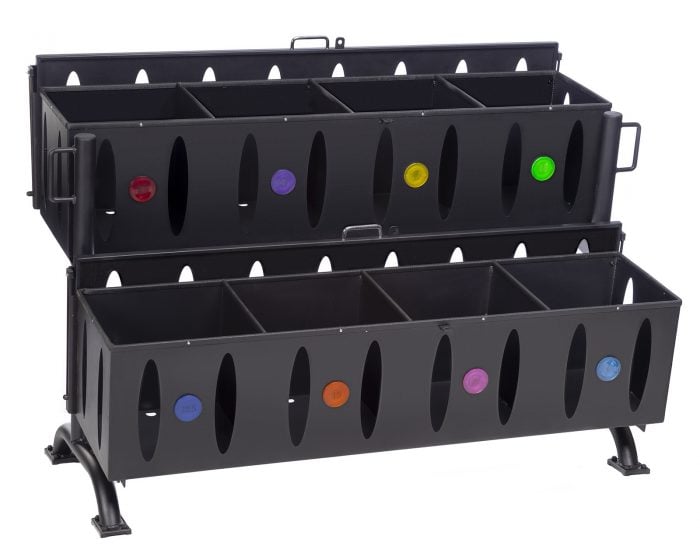
Storage & Racks
Proper equipment storage isn’t just about tidiness—it’s about efficiency, safety, space utilization, and brand presentation. At Hampton Fitness, our storage and racking solutions are engineered to handle heavy loads, maximize footprint, and maintain a polished gym aesthetic. Whether you’re outfitting a commercial facility, boutique training studio, or a high-end home gym, our systems help you organize equipment smartly and sustainably.
Types of Storage & Rack Systems
Vertical / Twin-Tower Dumbbell & Kettlebell Racks
Space-efficient, safe, and visually elevated.
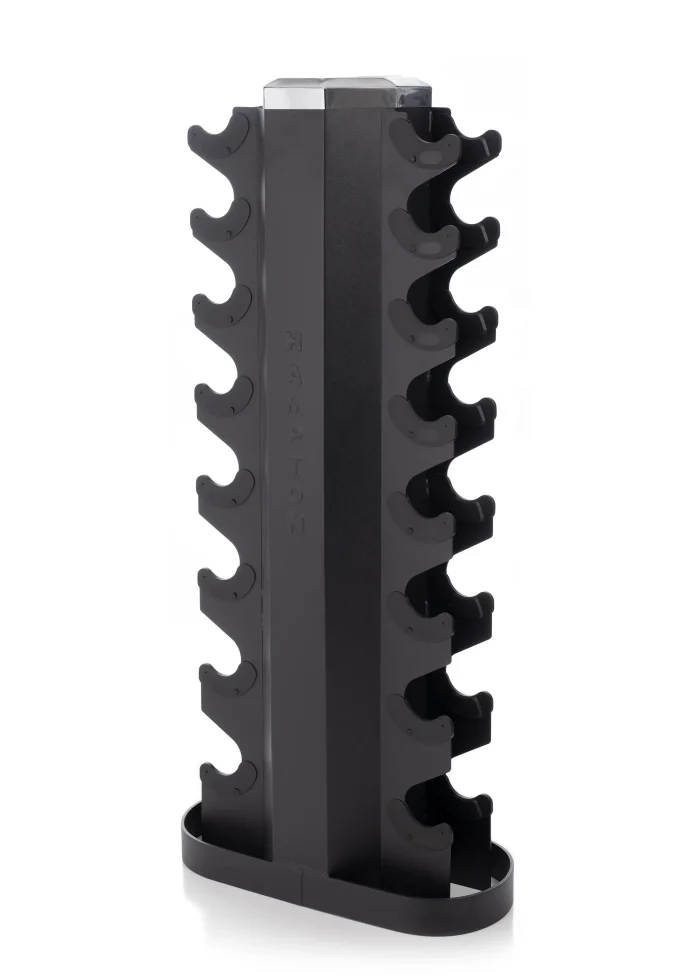
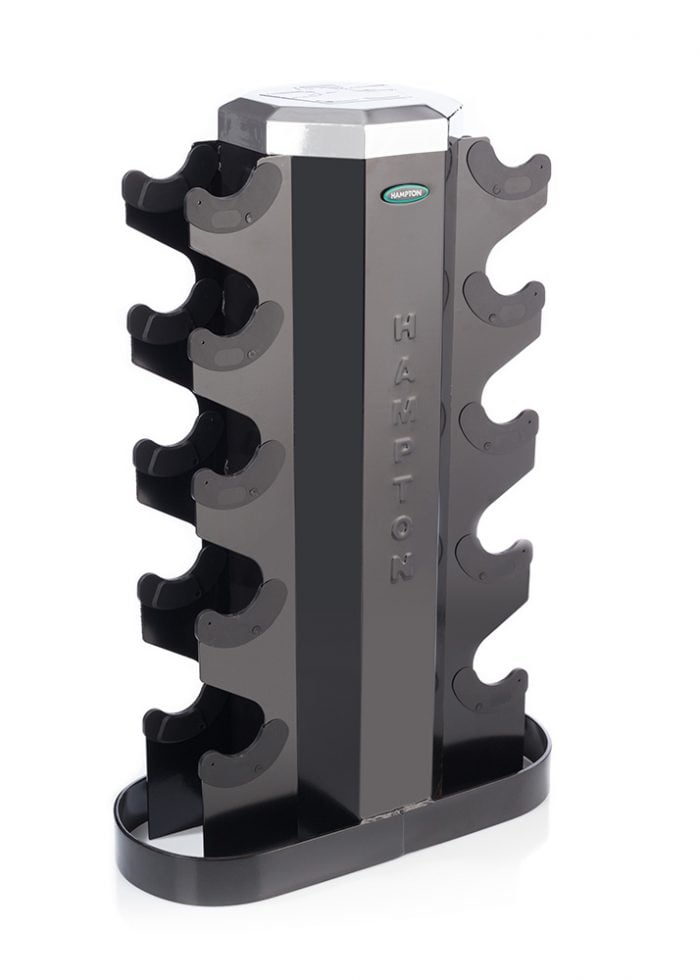
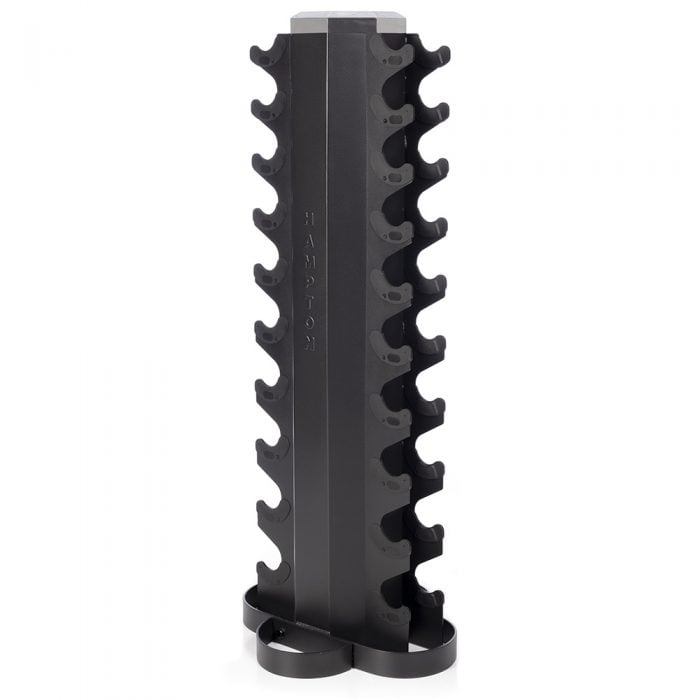
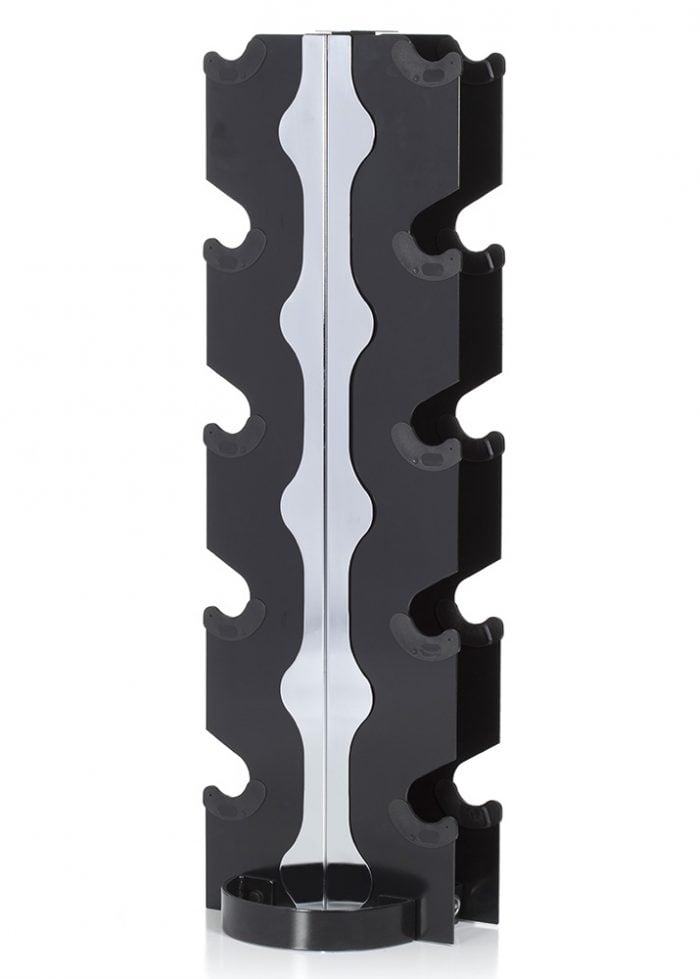
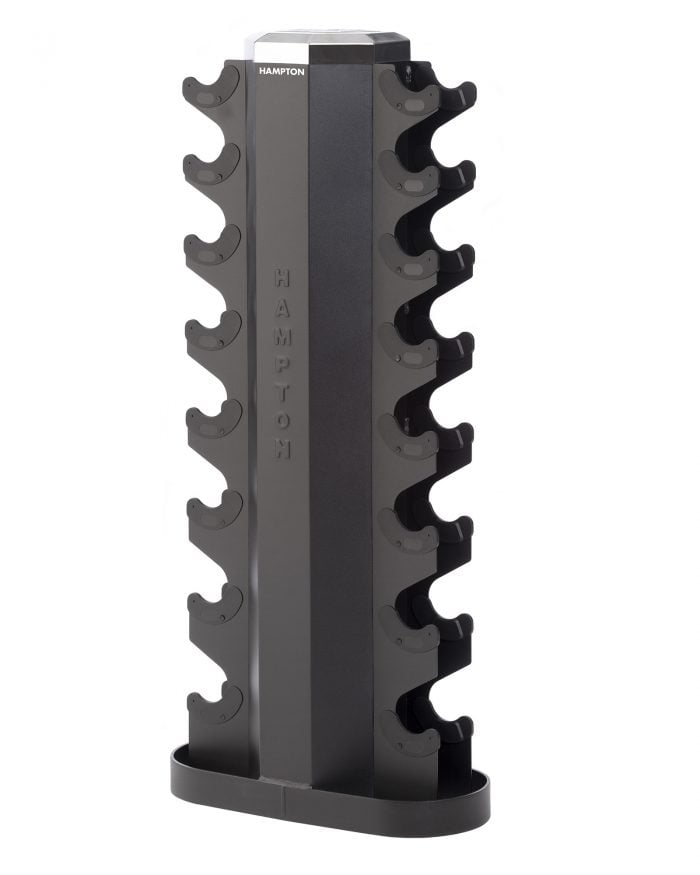
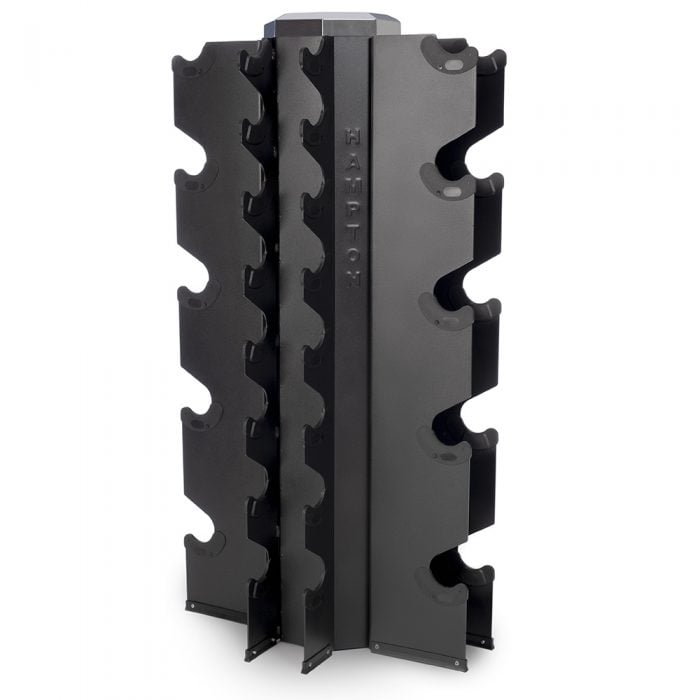
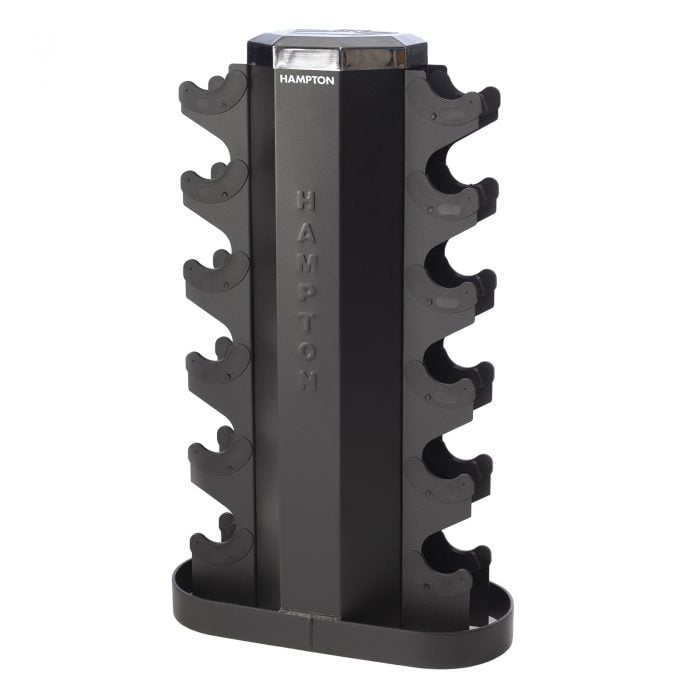
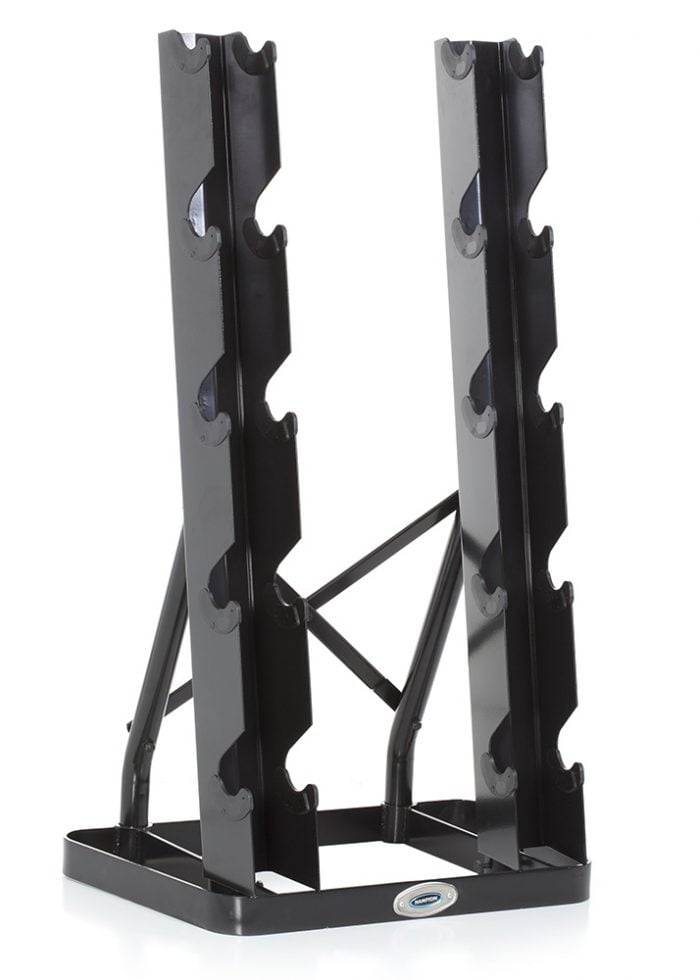
The Vertical Twin‑Tower Dumbbell Rack is a standout solution for facilities that need to store multiple dumbbell pairs in a minimal footprint. With twin-tower construction, heavy-gauge steel framing and angled shelving, this rack improves access, saves floor space, and keeps weights off mats where they could cause damage. Its design reduces trip hazards and enhances the facility’s look and user flow.
Best for: Commercial gyms, personal training studios, and home gyms where space is at a premium and presentation matters.
Rotational / Corner Plate Racks
Smart footprint, easy access, high capacity.
The Rotational Olympic Plate Rack offers a two-level design with full 360-degree rotation, enabling users to access plates easily from either side and fit the rack into corner spaces. It supports up to 1,000 pounds of Olympic plates and can also store a couple of Olympic bars vertically—ideal for estates or clubs with limited wall space. The rotation mechanism reduces time wasted searching for the right weight, allowing smoother transitions in class or training.
Best for: High-volume fitness clubs, multi-station training areas, and gyms with compact layouts needing high-capacity storage.
Secure Compartment Racks & Lockable Storage
Protect your gear and facility from mis-use or theft.
The 2‑Tiered 6‑Compartment Jelly‑Bell Rack is a lockable, compartmentalized storage unit designed for premium dumbbell sets (such as the Jelly-Bell series) or accessories that require secure storage. Each compartment accommodates specific weights or sets, ensuring organization and preventing misplacement. Ideal for boutique environments or shared spaces where equipment security and order are key.
Best for: Boutique studios, shared gyms, training facilities where personal equipment sets must be separated or locked between sessions.
Horizontal / Flat-Tray Multi-Tier Racks
Wide footprint for ease of loading, diverse use.
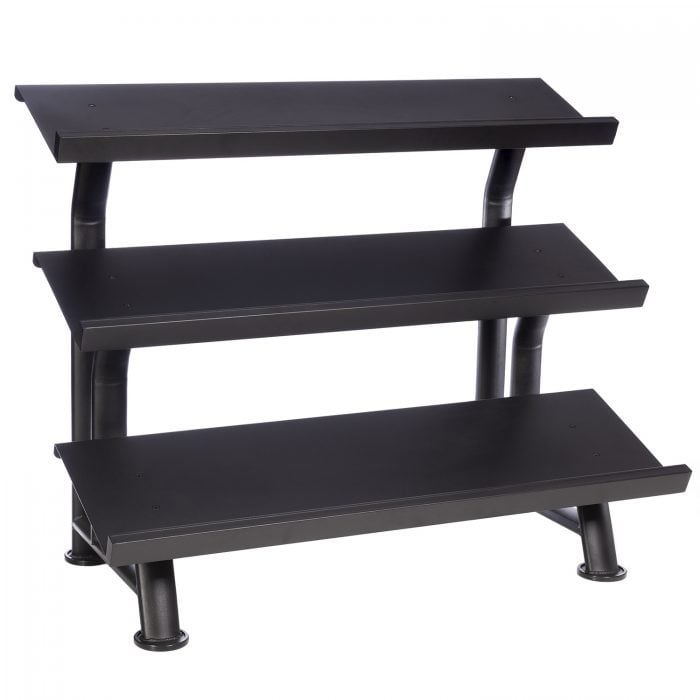
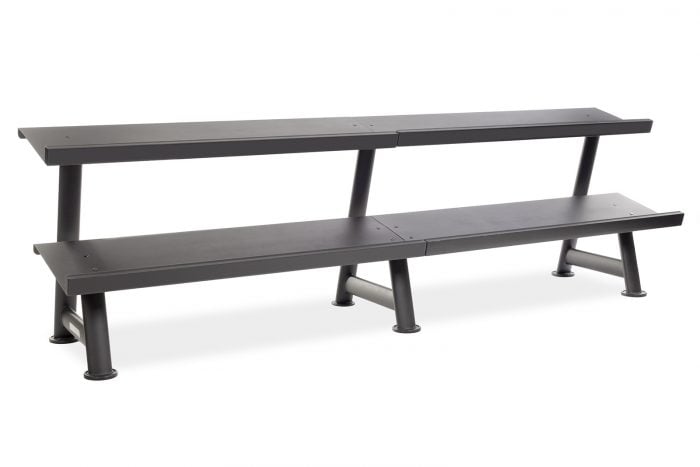
The Stadium 3‑Tier Flat‑Tray Rack is engineered for larger free-weight assortments and rapid access by users. The flat-tray tiers support multiple equipment items (e.g., hex dumbbells, club kettlebells) with biomechanically-designed access points and angled trays for intuitive pick-up/drop. The heavy-duty construction supports high-traffic use and contributes to a premium facility backdrop.
Best for: High-throughput gyms, athlete performance centers, and spaces where quick access to multiple weights is a priority.
Bar & Specialty Equipment Display Racks
Showcase specialty equipment with style and function.
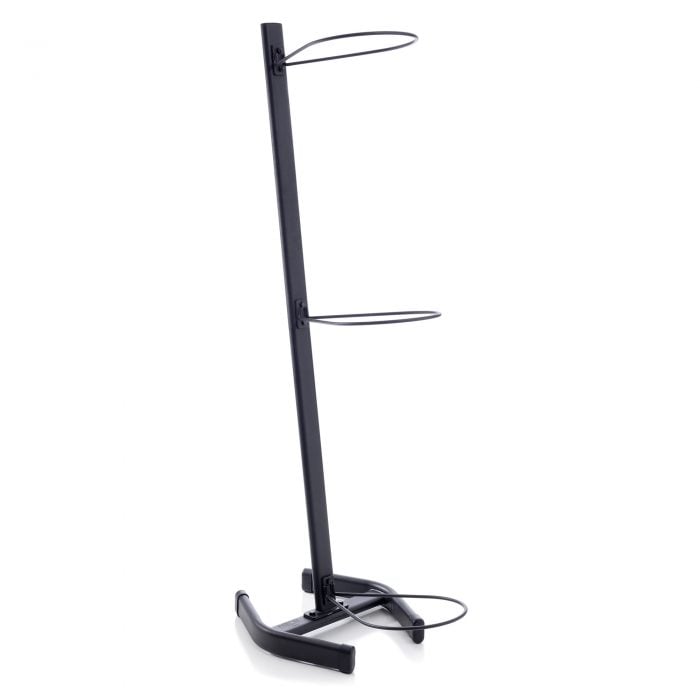
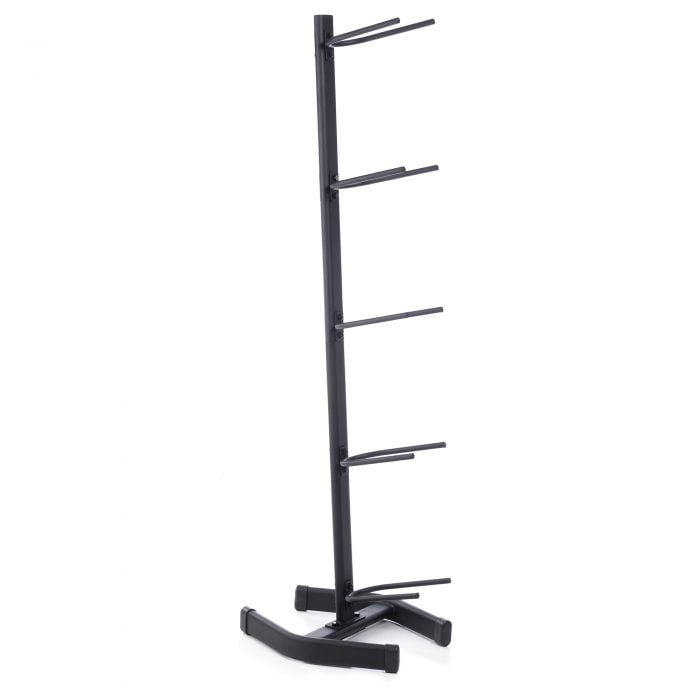
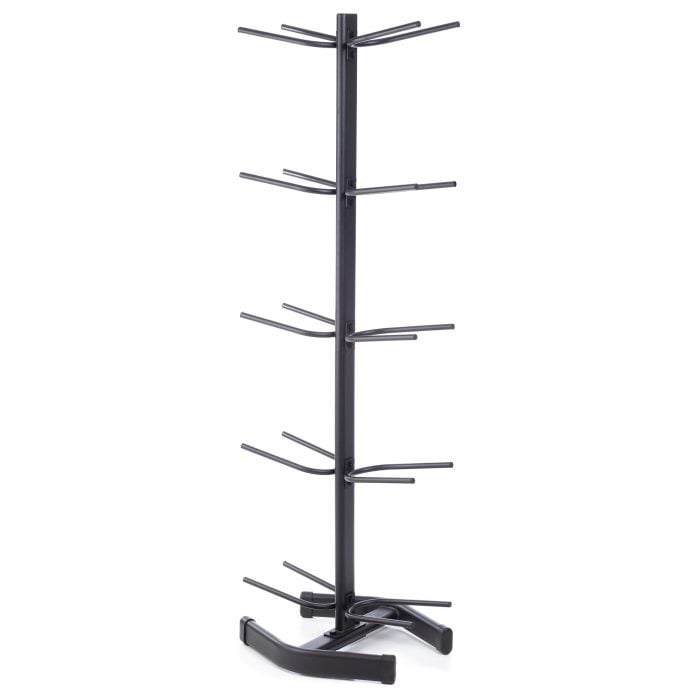
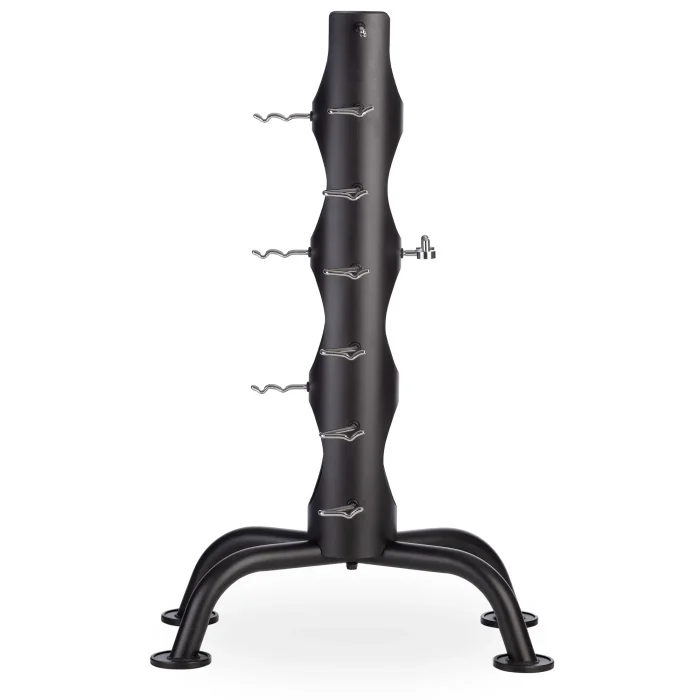
The Gel‑Bar Display Rack is designed to display and store specialty bars, cable attachments, or unique accessories—maintaining organization and elevating the visual presentation of your space. Ideal for clubs with a premium offering or boutique clientele who value aesthetics as well as function.
Best for: Premium gyms, boutique studios, and commercial facilities with specialty equipment that needs structured display and accessibility.
Finding the Best Storage & Rack System for You
When selecting storage and racking systems, consider these key factors:
- Footprint & Flow: Vertical versus horizontal layouts impact traffic flow. Choose towers for small footprints; flat trays for ease of access.
- Load Capacity & Material: Ensure racks are rated for the actual loads you’ll store—plates, dumbbells, kettlebells. Hampton’s steel construction delivers high durability and stability.
- User Access & Ergonomics: Racks should enable safe pickup and replacement of weights at appropriate heights to reduce injury risk.
- Visual and Organizational Impact: Client perception matters—clean, organized racks contribute to a professional environment and user experience.
- Maintenance & Lifespan: Quality coatings and welds reduce wear and maintenance cost over time (Hampton emphasizes low-maintenance, long-life products).
- Adaptability & Growth: Choose systems that can evolve with your gym—modular add-ons, extra tiers, or secure compartments can extend usability.
FAQs About Storage & Rack Systems
- Why is vertical storage often better than horizontal in a gym environment?
Vertical storage maximizes floor space, improves sight lines, and reduces clutter. By storing weights upright or in towers, you free up walking lanes and make the space safer and more efficient for members. - How can I ensure the racks I buy will handle the loads and daily use of a commercial gym?
Check the manufacturer’s load rating, weld quality, and use-case (commercial vs. home). Hampton Fitness specifically designs racks to be “attractive, low-maintenance products that improve facility appearance and increase safety.” - What are the benefits of lockable compartments for storage racks?
Lockable storage maintains organization, prevents equipment mix-up, protects high-value gear, and supports studios where clients or trainers bring their own sets. It also enhances security in shared spaces. - How should I plan the layout of storage racks to support training flow?
Place heavy-use racks close to primary training zones, align with traffic patterns, allow 3–4 ft access lanes, and ensure visibility. Use towers or trays strategically to guide movement and reduce congestion. - How do I maintain my storage racks to ensure long-term performance?
Surface wipe-downs, periodic checking of welds/bolts, and ensuring weights are loaded by weight zone help extend life. Preventing overloading, and using the correct rack for the correct equipment, keeps performance consistent.