

Plates
Plates are the heart of any strength-training setup. At Hampton Fitness, we engineer and curate plates that deliver load accuracy, grip comfort, and durability — so you can push heavy, train often, and know your gear will last. Whether you’re equipping a commercial facility or building a high-performance home gym, Hampton plates are built to withstand constant use while maintaining precision.
Explore our full line of plates and identify which ones best match your training style, equipment, and environment.
Types of Plates
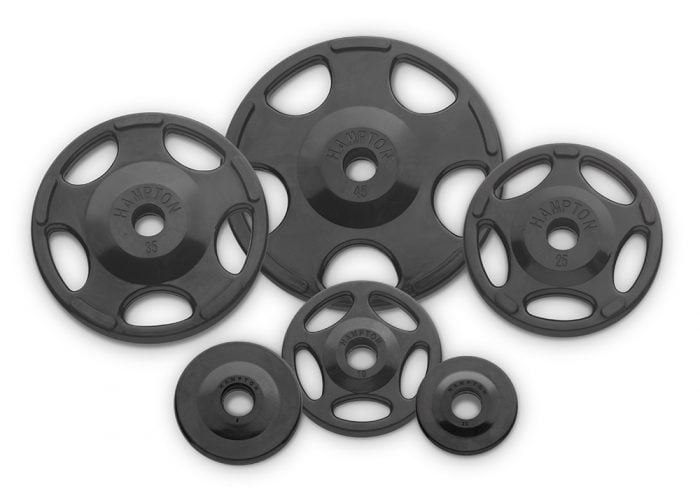
Premium Urethane Grip Plates
The elite standard in plate design.
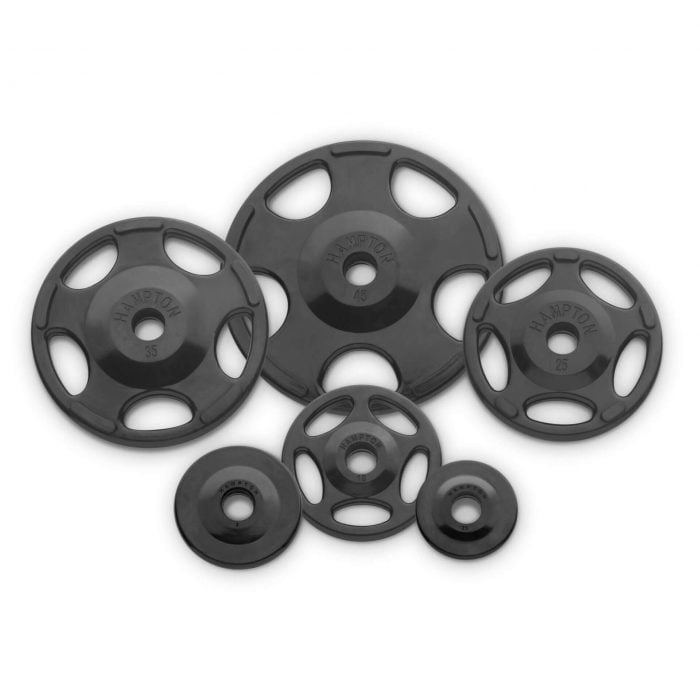
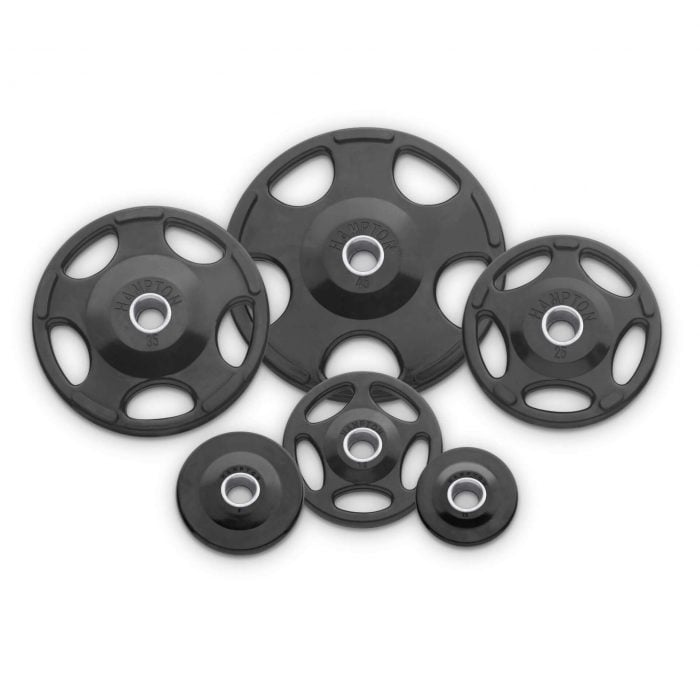
Hampton’s premium urethane grip plates combine a thick, resilient urethane shell with ergonomically designed handles and precision-machined hubs. These plates resist cracking, fading, and damage over time — even in high-traffic gyms. The grip handles make loading and unloading easier and safer, reducing strain on fingers, wrists, and equipment.
Best for: Everyday strength training, high-use commercial settings, aesthetically clean and long-lasting plate sets.
Virgin Rubber-Coated Grip Plates
High performance with cost-conscious durability.
These plates offer a durable rubber coating (virgin, high quality) over steel, with recessed grip handles and a matte finish. They protect floors and other equipment while offering a solid grip surface. Though not quite as impervious as urethane, they remain a step above basic cast iron plates and are often chosen when budget or availability is a factor.
Best for: Mid-tier gyms, secondary plate sets, or backup plates.
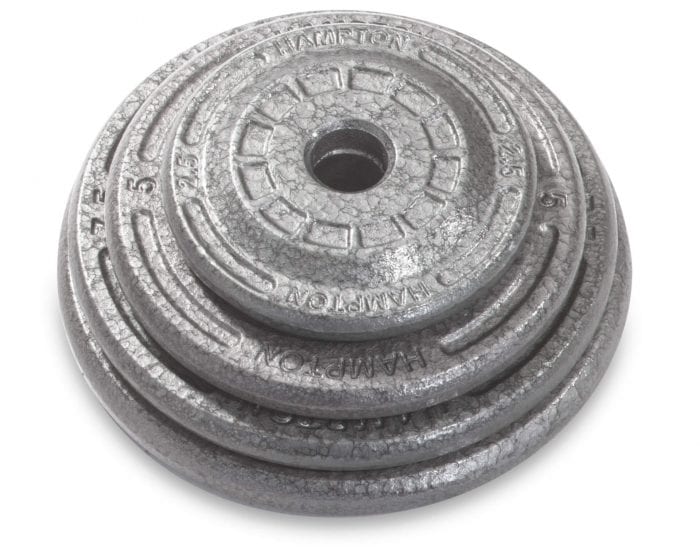
Cast Iron Grip Plates
Rugged, no-frills strength plates.
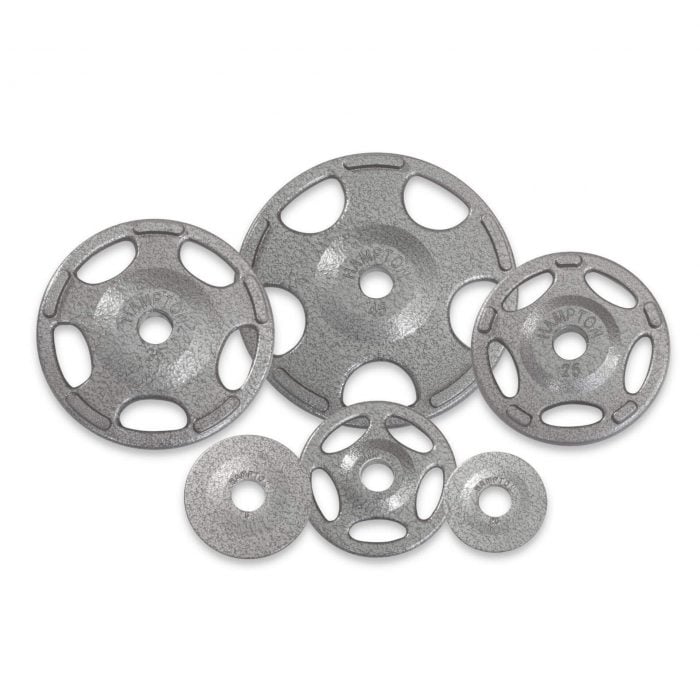
Built entirely from cast iron with molded grip holes, these plates are cost-effective and durable. They lack the protective outer shell of urethane or rubber, so they require more care (especially in humid or corrosive environments) — but when maintained, they deliver consistent performance and reliability.
Best for: Budget-oriented gyms, spare sets, or environments with protective flooring.
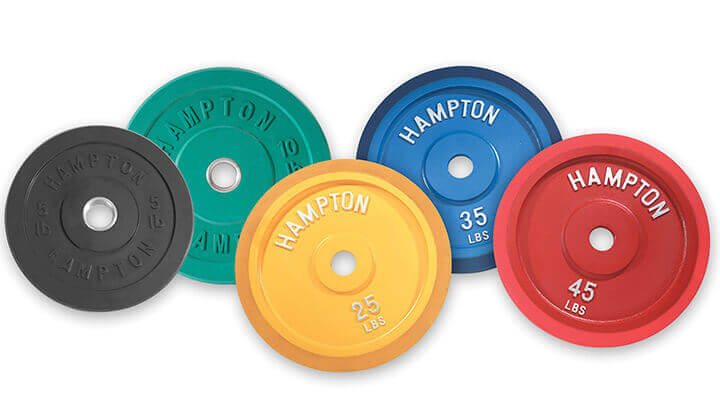
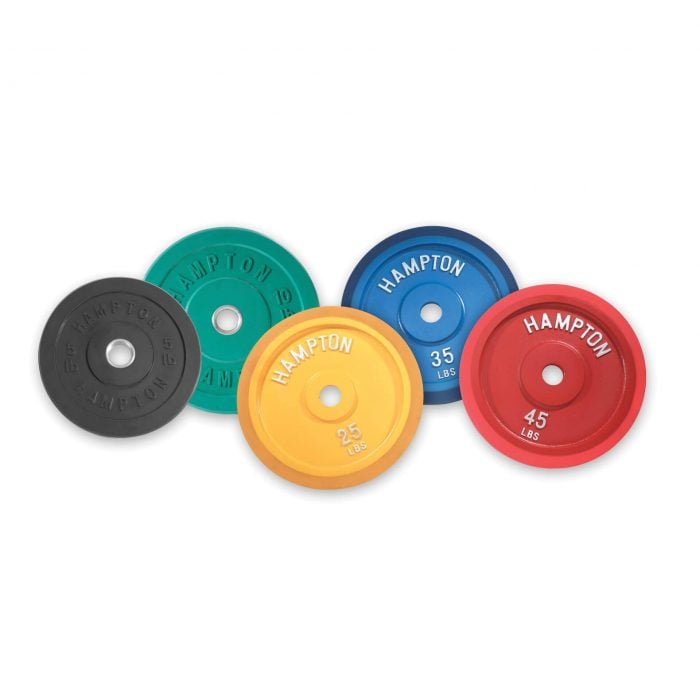
Precision Milled Bumper Plates
Engineered for performance and safety.
Bumper plates are designed to be dropped safely. Hampton’s precision-milled bumper plates are crafted from dense, high-grade urethane with reinforced steel centers for unmatched durability and balance.Each plate is machined to exact tolerances to ensure consistent diameter and weight distribution, absorbing impact efficiently to protect both equipment and flooring.
Best for: Drop training, Olympic lifts, dynamic styles of training, garage or home gyms with protective flooring.
1″ Standard / Pro-Style Stackable Plates
Compact, versatile, reliable.
Our 1-inch plates (steel or coated) are stackable, space-efficient, and compatible with traditional 1-inch bars. These are ideal for lighter loads, for accessory work, or in settings where Olympic bars aren’t used. Hampton’s versions maintain tight tolerances and consistent grip surfaces.
Best for: Home gyms, rehab settings, toning, or accessory lifts.
Plate Packs & Kits
Complete sets for streamlined purchasing.
Hampton offers plate packs (e.g., urethane grip plate packs, durable sets with matching bars or racks) to ensure consistency, cost savings, and design cohesion. These bundles simplify the decision process and ensure you match hub sizes, coating types, and aesthetics across your gym setup.
Best for: Gym builders, first-time buyers, or those upgrading full systems.
Exercises & Use Cases with Plates
Plates are used across virtually all strength training modalities. Here are common applications:
- Squats / Overhead Squats: Load a bar with matched plates to target lower-body strength.
- Bench Press & Pressing Movements: Use plates for traditional pressing or floor presses.
- Deadlift / Rack Pulls: Load from the floor or rack; combine bumper/iron plates as needed.
- Plate Raises / Core Work: Use individual plates for raises, twists, or weighted carries.
- Plate-Loaded Machines: Use plates to adjust resistance on plate-loaded machines.
- Drops & Explosive Training: With bumper plates, you can safely drop the bar from overhead (e.g., cleans, snatches).
- Accessory Movements: Weighted lunges, step-ups, or plate-loaded glute bridges.
Finding the Best Plates for You
Choosing the right plates comes down to your training modality, environment, and longevity expectations. Consider the following:
- Training Style & Usage: Olympic lifting or drop-heavy training demands bumper/urethane plates. For strictly traditional lifts, urethane or rubber-coated grip plates perform well.
- Space & Flooring: In spaces with limited protective flooring, choose coatings (urethane/rubber) that minimize damage and noise.
- Grip & Handling: Grip plates (urethane or rubber-encased) are far easier and safer to load/unload than solid plates.
- Durability & Wear: Urethane is top-tier for durability, resisting cracking, fading, and damage. Rubber coatings are viable but may wear over time; cast iron requires more maintenance.
- Matching Hub / Bore Size: Ensure compatibility with your bar sleeves (most Olympic plates use 2-inch bores).
- Budget & Value: Investing in higher-end plates pays off over time—Hampton’s selection includes options across price ranges but designed for longevity.
FAQs About Plates
- What’s the difference between grip plates and standard plates?
Grip plates include molded or recessed handles, making them easier to grip, load, and transport — reducing risk of injury or bar damage. - What is the benefit of urethane over rubber or cast iron?
Urethane offers superior durability, resistance to cracking or fading, and better protection for floors and gear. It’s the premium choice, especially in commercial settings. - Can I safely drop plates in my gym?
Only if you’re using bumper or precision-milled plates designed for impact. Avoid dropping bare metal or cast iron plates—they can damage floors, equipment, and themselves. - How do I know which weight increments to buy?
Start with a core set (e.g., 45/25/10/5 LB equivalents) and scale outward. Include smaller fractional plates (1–2.5 LB) for micro-loading if needed. - How should I maintain and store my plates?
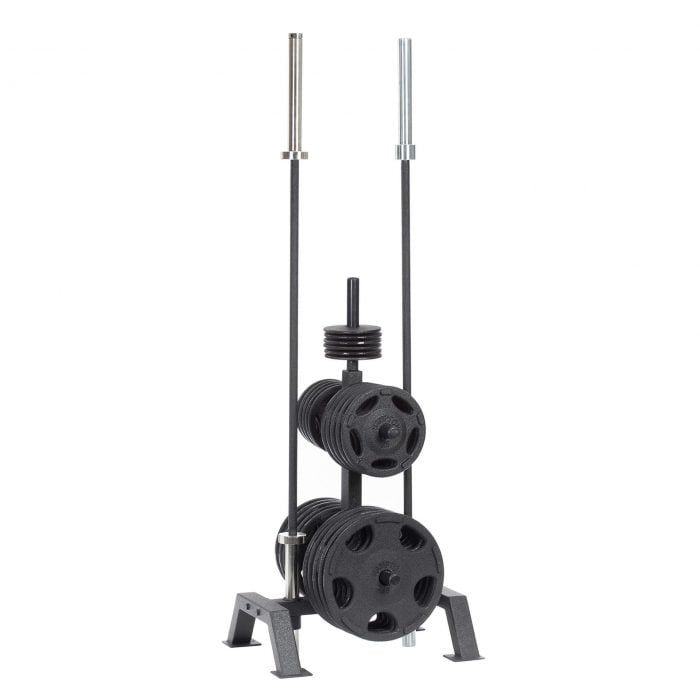
Store plates vertically or flat (depending on rack), keep them clean and dry, occasionally inspect for chips/cracks, and wipe with a damp cloth (no harsh chemicals) to preserve coatings.

We care what’s on your bar
Hampton’s rubber grip plates are fully encased in high-quality rubber preventing scratches to floors and equipment. The Hampton Rubber Grip plate has a recessed area around the ergonomically curved handle, making it easy to pick up off the floor.