




There’s nothing more frustrating than investing in gear that doesn’t work for you.
Too small, and your knees are jammed up to your chest.
Too big, and suddenly that “core stability workout” turns into a balance circus.
The fix? It’s not more effort.
It’s a better fit.
A large exercise ball isn’t just another piece of gym equipment. It’s one of the most powerful tools you can use to strengthen your core, improve posture, and build real-world stability.
But it only works if it fits your body.
Whether you’re looking to replace your office chair, level up your ab workouts, or finally stop sliding off the ball mid-crunch, this is the sizing guide you didn’t know you needed.
We’ll walk you through how to choose the perfect size based on your height, how to use it correctly, and why quality matters when you’re training (or sitting) on something that’s designed to move with you.
Let’s find your fit—and get you moving better than ever.
What Is a Large Exercise Ball—and Why Use One?
It’s simple.
It’s versatile.
And when used correctly, it’s one of the most effective tools for improving how you move, sit, stretch, and train.
A large exercise ball—also known as a Swiss ball, stability ball, or gym ball—is typically sized 65 cm to 75 cm in diameter. That means it’s designed for taller individuals or anyone looking for greater range of motion and support during movement.
But don’t be fooled by its simplicity. This oversized inflatable sphere packs serious potential.
What Makes It “Large”?
Most exercise balls range between 45 cm and 75 cm in diameter when fully inflated. A “large” exercise ball generally refers to:
- 65 cm – ideal for people 5’8” to 6’1”
- 75 cm – ideal for those over 6’2”
These sizes give you more height, more surface area, and more comfort during workouts or prolonged seated use. If you’re tall, using a smaller ball means your knees are elevated, your back is strained, and your balance suffers.
What’s It For?
The better question is—what isn’t it for?
A large exercise ball can be used to:
- Strengthen your core through instability-based movements
- Improve posture and reduce spinal pressure when seated
- Enhance flexibility with supported stretching
- Add variety to traditional bodyweight workouts
- Support prenatal mobility and recovery in pregnancy and postpartum fitness
- Replace your desk chair for short periods to promote active sitting
And because it’s soft yet supportive, it’s a joint-friendly tool that can benefit everyone from first-time movers to seasoned athletes.
Recommended products
-
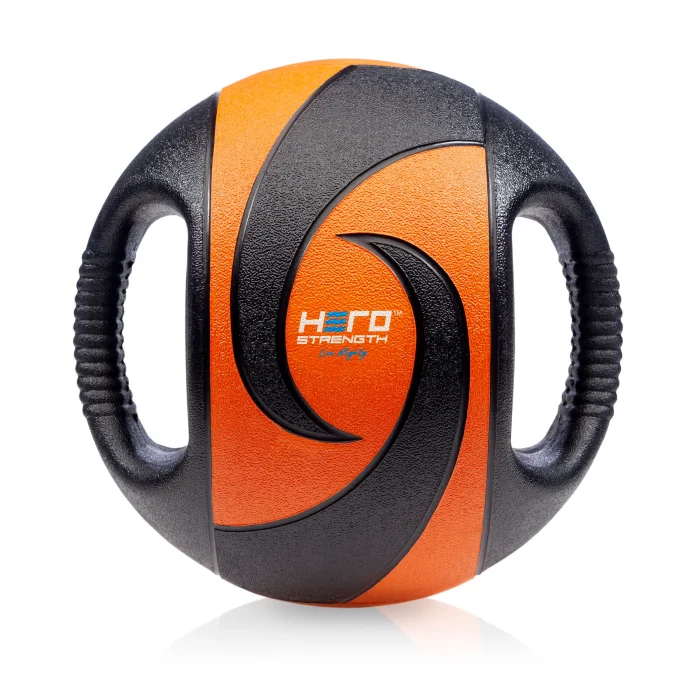
Hampton Dual Handle Medicine Ball
Price range: $76.00 through $112.00 -
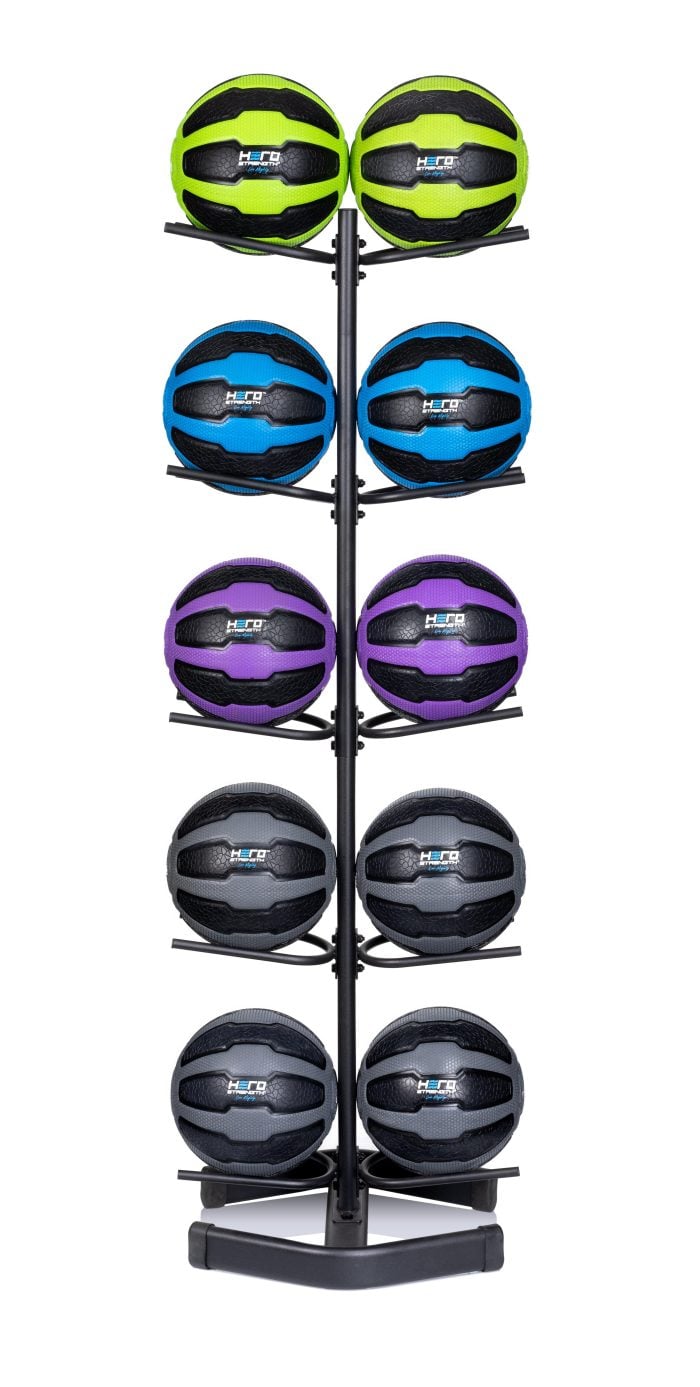
Hampton Remedy Medicine Balls | 10 Pack Heavy
$999.00 -
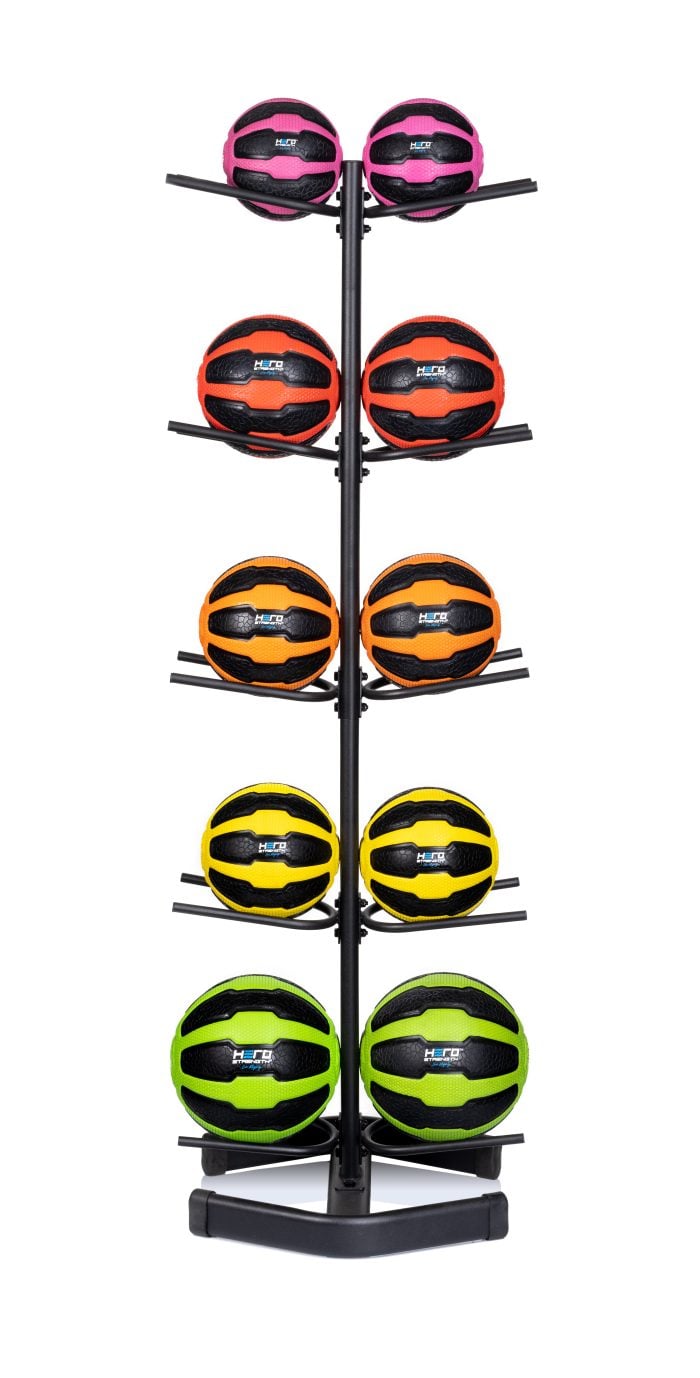
Hampton Remedy Medicine Balls |10 Pack Lite
$699.00
Why Bigger May Be Better (for You)
If you’re over 5’8″, a standard ball probably isn’t cutting it. You’re sacrificing:
- Proper knee and hip alignment during seated use
- Full range of motion during exercises like back extensions or bridges
- Stability during movement, especially if your ball feels too small beneath you
A large exercise ball helps you train smarter, not harder, by fitting your frame, supporting proper form, and allowing your muscles (not your joints) to do the work.
How to Choose the Right Size Exercise Ball
An exercise ball that fits your body = better results, less strain, and safer movement. Simple.
If the ball is too small, you’ll be hunched over. Too large, and you’ll struggle to stay balanced. The right fit allows your hips, knees, and spine to stack correctly, whether you’re working out or just sitting.
Use the chart below to match your height to the correct ball size. If you’re looking for a large exercise ball, you’ll fall into the 65–75 cm range.
Exercise Ball Size Chart by Height
| Your Height | Recommended Ball Size | Ball Diameter |
| Under 5’1” (155 cm) | Small | 45 cm |
| 5’1” – 5’7” (155–170 cm) | Medium | 55 cm |
| 5’8” – 6’1” (173–185 cm) | Large | 65 cm |
| 6’2”+ (188 cm and up) | Extra Large | 75 cm |
Tip: If you’re between sizes, consider how you’ll use the ball:
- For workouts: Slightly larger balls help you achieve deeper range of motion
- For sitting at a desk: Slightly smaller balls ensure 90° angles at the hips and knees
Weight Capacity Matters—Here’s Why
Not all exercise balls are built the same.
Cheaper, low-quality balls may start to compress, wobble, or even burst under higher loads, especially if you’re over 200 lbs or plan to do dynamic strength movements.
A high-quality, large exercise ball should:
- Have a weight capacity of 600–1000 lbs (static)
- Be made of anti-burst, commercial-grade PVC
- Offer a non-slip surface for better grip and control
Most consumer-grade balls max out around 330 lbs. But Hampton Fitness balls are designed for studio use, making them ideal for athletes, taller users, and heavier movements.
Quick Check: Is the Size Right for You?
Sit on the ball with feet flat, knees bent:
- Your hips should be level with or slightly above your knees
- Your knees should form a 90° angle
- Your back should stay upright without leaning forward or back
If you feel like you’re sinking or perched too high, you likely need to adjust the inflation or go up/down a size.
How to Test If Your Exercise Ball Is the Right Size
Even if you’ve got the “right” size based on a chart, the real test comes down to how the ball works with your body.
Whether you’re sitting, stretching, or crushing a plank series, the way your spine, knees, and hips align on the ball will tell you everything you need to know.
Here’s how to find out if your large exercise ball is actually the right fit.
The Seated Posture Test
This is your go-to sizing checkpoint—especially if you plan to use the ball as a desk chair or base for strength training.
Sit on the ball with:
- Feet flat on the floor
- Knees bent at a 90° angle
- Hips level with (or just above) your knees
You’ve got the right size if:
- Your thighs are parallel to the ground
- Your back is upright and your core feels lightly engaged
- You’re not leaning forward or sinking into the ball
Too small? You’ll feel compressed, hunched, or like you’re falling into the ball.
Too big? You’ll feel elevated and unstable, with knees dipping below your hips.
The Movement & Control Test
Use this for checking how the ball behaves during workouts:
- Try a plank with forearms on the ball—do your shoulders, hips, and core stay aligned?
- Try a hip bridge with feet on the ball—can you lift and hold without rolling or wobbling excessively?
- Perform a wall squat—does the ball roll smoothly down your spine, or does it shift out of position?
The right size ball should feel like an extension of your body, not a balancing act.
Inflation Tip: Don’t Judge Too Soon
Keep in mind: exercise ball sizes are based on full inflation, not the out-of-the-box look. If your new ball feels soft or undersized, it likely needs more air.
- Inflate gradually over 24 hours to allow the material to stretch
- Use a tape measure to confirm height against your selected size (e.g., 65 cm or 75 cm when fully inflated)
- Re-check fit after a few days of use and adjust as needed
Best Uses for Large Exercise Balls
A large exercise ball isn’t just a stability tool. It’s a full-body fitness essential. From training your core to improving your posture and flexibility, this one piece of equipment can do the job of many, if you know how to use it right.
Here are the best ways to put your large exercise ball to work.
Core Workouts & Stability Training
Instability is the name of the game—and that’s where the magic happens. Using a large exercise ball for core work recruits deep stabilizer muscles that regular crunches can’t touch.
Top Core Exercises:
- Forearm Plank on Ball – Forces core activation and full-body tension
- Ball Pass (hands to feet) – Great for lower abs and coordination
- Oblique Twists – Sit on the ball holding a dumbbell or med ball and rotate side to side
- Reverse Crunches – Elevate your legs and tuck from the hips
- Ball Pike – Feet on the ball, pull hips up into a pike position (advanced)
Functional Strength Movements
The large exercise ball adds range, support, and intensity to classic bodyweight exercises.
Top Strength Exercises:
- Wall Squats with Ball – Great for form correction and quad/glute engagement
- Hamstring Curls – Lie on your back, heels on the ball, lift hips and curl
- Push-Ups on Ball – Place hands or feet on the ball for added challenge
- Back Extensions – Lay belly-down on the ball to target the spinal erectors
These movements enhance balance, coordination, and joint integrity, especially for taller users who benefit from the extra surface area of a larger ball.
Posture and Ergonomics (aka Active Sitting)
Many people swap out their desk chairs for large exercise balls to encourage active posture and spinal engagement. While not a full-time replacement for ergonomic seating, it can be a great tool for short sitting sessions.
Guidelines for Sitting on a Large Ball:
- Keep feet flat and hip-width apart
- Engage your core gently to remain upright
- Take movement breaks every 30–60 minutes
- Don’t slouch or perch at the front of the ball
Use your ball during phone calls, light computer tasks, or meetings to reset posture and reduce spinal compression.
Stretching, Mobility & Recovery
Because it conforms to your spine and supports body weight, a large ball is a powerful stretching and mobility tool.
Best Stretching Uses:
- Chest Opener / Backbend – Lie back over the ball and open arms wide
- Hip Flexor Stretch – Kneel with one foot forward, rest your shin on the ball behind you
- Thoracic Rotations – Sit upright and twist through the upper back
- Prenatal Mobility – Rocking, supported squats, and gentle seated stretches
A large ball helps reduce joint strain while giving your muscles space to stretch safely.
6 Common Mistakes to Avoid When Using a Large Exercise Ball
A large exercise ball can be an incredibly effective training tool, but only if you’re using it properly. Misuse can lead to wasted effort, poor posture, or even injury.
Here are the most common mistakes people make with exercise balls and how to avoid them like a pro.
1. Choosing the Wrong Size
This is the big one. If the ball is too small or too large for your height and movement style, you’ll feel off-balance, misaligned, or unsupported. And that defeats the purpose.
Fix it: Use the size chart from earlier. If you’re tall (5’8”+), aim for a 65–75 cm ball. Always do a seated posture check to confirm the right fit.
2. Over- or Under-Inflating the Ball
Inflation dramatically affects how the ball supports your body. Under-inflated balls sag and reduce stability. Over-inflated balls become too hard, unstable, or elevate you too much.
Fix it: Inflate the ball to its labeled diameter (e.g., 65 cm or 75 cm). Use a tape measure and allow the ball to stretch over 24 hours after initial inflation for best results.
3. Using a Low-Quality or Worn-Out Ball
Cheap exercise balls may lack anti-burst protection, skid-resistant texture, or proper material thickness, especially dangerous at larger sizes. Over time, they can become uneven or even unsafe.
Fix it: Invest in a commercial-grade large exercise ball like those from Hampton Fitness, made with durable, anti-burst materials that hold up to dynamic movement and high static weight loads.
4. Poor Posture During Sitting or Exercises
Slouching, leaning too far forward, or “perching” at the edge of the ball throws your alignment off and defeats the purpose of using the ball to support your spine.
Fix it: Always sit with hips aligned over knees, core engaged, and shoulders stacked above hips. Whether sitting or training, your spine should stay tall and supported.
5. Using the Ball on a Slippery or Uneven Surface
Hardwood, tile, or uneven flooring can cause the ball to shift beneath you unexpectedly, especially when doing core work, planks, or bridges.
Fix it: Place a non-slip mat under the ball when using it on slick floors. Make sure the area is clear of obstacles and has enough space for movement in all directions.
6. Holding Static Positions Too Long
If you’re using a ball as a desk chair, sitting for hours without movement defeats the purpose of “active sitting” and can still lead to tight hips and spine fatigue.
Fix it: Use your ball in 30–60 minute intervals, then switch back to a traditional chair. Alternate throughout the day to reduce postural fatigue.
Why Quality Matters – Hampton Fitness Stability Balls
Once you move beyond basic movement, the quality of your equipment becomes everything.
A large exercise ball is a dynamic tool. You’re balancing on it, stretching over it, training your core against it—and in many cases, sitting on it for long periods. That means one thing: it had better hold up.
Not all exercise balls are made to handle that kind of pressure. But Hampton Fitness balls are.
Built for Performance. Designed for Real-World Use
When you train with Hampton Fitness, you’re using equipment trusted in commercial gyms, performance studios, and rehab settings across the country.
Our large exercise balls are:
- Made with anti-burst PVC, rated for high weight capacity and dynamic movement
- Textured for grip, so you stay stable whether you’re training in socks, sneakers, or barefoot
- Sized for every body, with clear labeling and accurate inflation guidance
This isn’t flimsy, consumer-grade plastic. It’s commercial-grade quality built for years of use, no matter how hard you train.
The Right Fit for Sitting, Stretching, and Strength
Whether you’re using your ball to train your core or improve your posture while working, you want something that holds its shape, supports your alignment, and feels solid beneath you.
Hampton exercise balls provide:
- Consistent pressure retention for lasting support
- Smooth surface transitions for safer rolling during bridges, crunches, and presses
- Height-specific sizing options (55 cm, 65 cm, 75 cm) so you get a tailored fit
No guessing. No slippage. Just a better training experience.
Recommended Sizes for Most Adults
| Your Height | Hampton Ball Size |
| Under 5’7” | 55 cm |
| 5’8” – 6’1” | 65 cm |
| 6’2” and above | 75 cm |
If you’re shopping for a large exercise ball, you’ll likely need the 65 cm or 75 cm option, both available from Hampton in our premium-quality build.
A Final Word: Fit Your Ball to Your Body, Not the Other Way Around
The wrong-size ball can throw off your posture. The wrong-quality ball can throw off your entire workout. But the right large exercise ball? That’s a game-changer for your core, your spine, your balance, and your performance.
Choosing the correct size and quality isn’t just about comfort. It’s about:
- Training smarter, not harder
- Supporting better posture, whether at your desk or on the mat
- Getting more out of every rep, every stretch, and every seated second
You’ve got the info. Now it’s time to pick the ball that fits your body—and your goals.
Ready to Find Your Perfect Fit?
Explore our selection of:
- Premium large exercise balls in 65 cm and 75 cm sizes
- Anti-burst, commercial-grade designs built for core training, seated use, and mobility
- Durable fitness gear trusted by trainers, athletes, and rehab pros nationwide
Whether you’re working, working out, or somewhere in between, Hampton Fitness has the stability ball to support every move.
Train strong. Sit smart. Move better—with Hampton Fitness.