




Cable pushdowns are a staple for building triceps.
But not all attachments deliver the same results.
The rope and the straight bar each load your arms differently, and choosing the wrong one can limit growth or aggravate your joints.
Let’s talk exactly when to use the rope vs the bar for stronger triceps, safer training, and better performance.
No guesswork, just proven guidance and form tips you can use right away.
Why Your Cable Attachment Choice Matters
Your triceps make up about two-thirds of your upper arm. If you’re not training them effectively, you’re leaving size and strength on the table.
Cable pushdowns are one of the most efficient ways to isolate the triceps, but only when you’re using the right attachment.
The bar and the rope hit your muscles differently, especially at the lockout and stretch positions. That means your results will change based on which tool you pick.
The bar offers maximum control and stability. It keeps your wrists locked in and your form tight, especially when you’re pushing heavier loads.
The rope gives you more freedom at the bottom of the movement, allowing for a stronger squeeze and a deeper range of motion.
It’s not just about preference. It’s about purpose.
The right attachment helps you train harder without compromising your joints or technique.
Hampton Fitness offers premium tricep ropes and cable bars designed to fit commercial rigs and home setups alike. Built for grip, comfort, and durability, they’re made to handle real work in real gyms.
Choosing the right attachment is a training decision. And it starts here.
Recommended products
-
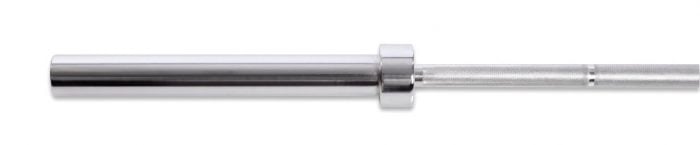
Hampton 500lb Olympic Bar
$173.00 -

Triceps “Press Down” Rope | Double-Grip
$49.00 -
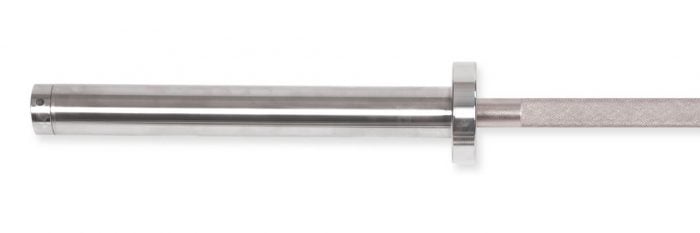
The American Power Bar
$499.00
Tricep Rope Attachment: Pros, Cons, and Best Use
The tricep rope is a tool for improving range of motion, reducing joint strain, and squeezing more tension out of every rep.
Whether you’re finishing a push session or chasing high-rep hypertrophy, the rope has its place in serious arm training.
When to Use the Rope
If joint comfort, range of motion, and muscle activation are priorities, the rope attachment is your best choice. It allows for a natural wrist rotation at the bottom of the movement, which can reduce stress on your elbows and shoulders, especially during high-rep sets or hypertrophy-focused training.
Use the rope when:
- You’re chasing a deep squeeze and full lockout
- Your elbows feel irritated during bar pushdowns
- You’re aiming for 10–15 rep sets with controlled tempo
The rope works especially well in drop sets, supersets, or as a finisher after heavy pressing.
Benefits of the Rope
- Wrist mobility: Allows your hands to rotate outward at the bottom, which puts the long head of the triceps in a stronger contraction position.
- Joint-friendly: The flexible grip takes pressure off the wrists and elbows, making it ideal for lifters managing discomfort.
- Greater range of motion: The ability to flare the rope at the bottom increases time under tension, great for growth.
Hampton’s tricep ropes are designed with heavy-duty braided construction and ergonomically molded rubber ends for a solid grip and longer-lasting performance.
Potential Drawbacks
- Less stability under heavy load: The rope doesn’t offer the same rigid control as a bar, which can make it harder to maintain strict form when the stack gets heavy.
- Easier to cheat form: Without proper cueing (like keeping your elbows pinned and torso still), it’s easy to let momentum do the work.
Use the rope for control, not speed. When used correctly, it can help you dial in technique and add quality volume to your tricep training.
Bar or V-Bar Attachment: Pros, Cons, and Best Use
The straight bar or V-bar isn’t flashy, but it’s a staple for a reason.
When your focus is on stability, control, and moving heavier loads with clean form, a rigid attachment delivers. If your goal is building strength, or you simply prefer a tighter grip and minimal wrist rotation, the bar gets the job done.
When to Use the Bar
The bar shines in strength-focused rep ranges (6–10 reps), especially early in your workout when you’re fresh and can move heavier weight with precision. It’s also the better choice when you’re working on tempo control and minimizing torso sway.
Use the bar when:
- You’re pushing heavier loads for lower reps
- You want more control through the full range
- Your form needs to stay locked in under fatigue
It’s also ideal for lifters who already have a neutral wrist position and don’t require much rotation at the bottom of the movement.
Benefits of the Bar
- Maximum stability: A fixed grip keeps your movement path consistent, especially under load.
- Better force transfer: Less wrist rotation means more direct power from triceps to cable.
- Clean form: Helps keep elbows tucked and torso rigid, ideal for strict pushdowns.
Pair it with Hampton Fitness’s chrome cable bars or V-handle attachments for durability and grip consistency, especially in commercial or high-traffic gym setups.
Potential Drawbacks
- Limited wrist freedom: The bar’s fixed grip can feel restrictive if you have joint issues or limited mobility.
- More joint stress at awkward angles: Especially for lifters with long arms or shoulder limitations, the straight bar may put excess strain on elbows or wrists.
That’s why rotating between bar and rope (based on load, comfort, and movement quality) is often the smartest approach.
How to Choose Based on Your Goal
You don’t need to commit to one attachment forever. The best lifters rotate tools based on their training goal, fatigue level, and how their joints feel that day.
Whether you’re chasing size, strength, or joint longevity, the right attachment helps you train harder and smarter.
Here’s a quick breakdown to help you choose the right tool for the job:
Tricep Rope vs Bar: Goal-Based Comparison
| Training Goal | Recommended Attachment | Optimal Rep Range | Why It Works |
| Muscle Growth (Hypertrophy) | Rope | 10–15 reps | Greater range of motion, better end-range contraction, joint-friendly |
| Strength & Power | Straight Bar or V-Bar | 6–10 reps | Maximum load capacity, stable grip, better force transfer |
| Joint-Friendly Training | Rope | 12–15 reps | Allows natural wrist rotation, reduces elbow/wrist strain |
| Strict Form & Control | Straight Bar or V-Bar | 8–12 reps | Fixed grip helps maintain consistent technique and reduce momentum |
| Versatile/All-Purpose | Alternate within the workout | Varies | Combine both for volume, load variation, and reduced fatigue |
Pro Tip:
Use the bar early in your workout when you’re fresh and going heavy. Switch to the rope later in your session when your joints are warm and you’re chasing higher-rep pump work. This lets you keep the stimulus high without sacrificing form or comfort.
Expert Tips for Better Cable Pushdowns
Using the right attachment is only half the equation. If your form is off, the benefits of either the rope or the bar go out the window. Proper setup, execution, and tempo are what keep the tension on your triceps and off your joints.
Dial In Your Setup
Get these cues right, no matter which attachment you’re using:
- Elbows pinned to your sides; don’t let them flare out
- Shoulders down and back, no shrugging
- Slight hip hinge, stand tall but lean in just enough to stay stable
- Neutral spine, avoid arching or leaning too far forward
- Hands finish just below your navel, don’t push all the way to your thighs
Form first. Load second. Every rep should look the same, whether it’s your first or your fifteenth.
How to Use Both Attachments in One Workout
There’s no rule saying you have to pick one and stick with it. In fact, rotating between the rope and the bar in the same session can be a smart way to manage fatigue and keep tension high.
Example training flow:
- Set 1–2: Heavy bar pushdowns, 6–10 reps (focus on control and load)
- Set 3: Lighter rope pushdowns, 12–15 reps (focus on stretch and squeeze)
- Optional finisher: High-rep rope drop set (15+ reps) for pump work
Feel joint discomfort mid-set? Switch attachments, but keep the tempo and rep target the same to maintain the stimulus.
Equipment Tip:
If you’re in a commercial or high-traffic gym, bring your own gear. Hampton’s tricep rope and chrome cable attachments are made to handle repeated use without fraying, rusting, or slipping, even under max load.
What the Science Says
Attachment choice makes a difference, but not always in the way most lifters think. It’s not about which tool “activates” more muscle. It’s about how well you use it.
A study published in the International Journal of Strength and Conditioning compared the effects of different cable pushdown variations (including rope and bar attachments) on triceps activation and joint torque.
The researchers found no significant difference in muscle activation near failure when tempo, grip width, and elbow positioning were controlled. In short, technique matters more than the tool.
What this means for you:
- Don’t chase gear hype, chase clean execution
- Match your attachment to your goal and joint needs
- Control every rep, regardless of tool
Whether you’re using Hampton’s rope or V-bar attachment, the right training outcomes come from consistent form, smart programming, and load management.
Final Verdict: Which Should You Use?
There’s no single “best” attachment for triceps training. The right choice depends on what you’re trying to accomplish and how your body feels during the movement.
Here’s the bottom line:
- Use the bar or V-bar when you need maximum stability and load. It’s ideal for heavier sets and strict, controlled form.
- Switch to the rope when you want more freedom at the bottom of the movement, less joint stress, or greater mind-muscle connection.
Smart lifters rotate attachments based on the session’s focus.
Strength phase? Start with the bar.
Hypertrophy block or high-rep burnout? Grab the rope.
Elbows bothering you mid-set? Swap tools and keep the work going, without sacrificing form.
Training with intent means more than just picking the heaviest stack. It means selecting the right tool, at the right time, for the right result.
Final Thoughts: Train With Purpose, Not Just Weight
Your tricep attachment isn’t an afterthought. It’s a training decision.
The rope and the bar each offer benefits depending on your goal, load, and joint needs.
Ready to Find Your Perfect Fit?
Explore our selection of:
- Premium tricep ropes, built for full ROM, comfort, and joint-friendly training
- Heavy-duty, commercial-grade construction, made to last through high-volume sessions
- Pro-level attachments trusted by lifters, coaches, and training facilities nationwide
Whether you’re chasing arm growth, staying pain-free, or programming smarter for your clients, Hampton Fitness has the cable gear to support every rep.
Train smart. Push hard. Grow stronger with Hampton Fitness.
Choose the tool that fits the moment. Switch when your body calls for it. And remember: good training isn’t rigid.
It’s responsive.