




Most lifters already know what a curl weight bar is. The more useful question is when it actually makes sense to use one instead of reaching for the straight bar that’s probably already loaded and ready to go.
That decision comes up more than people think.
It shows up when straight-bar curls start feeling rough on the wrists mid-set. It shows up when a client needs a better grip option for skull crushers.
It shows up in home gyms where one bar needs to pull double duty across more than just arm day.
A curl weight bar is not a replacement for a straight bar, and it is not just an arm-day novelty. It’s a tool that earns its place in specific situations, and knowing what those situations are is the difference between using it strategically and letting it collect dust between biceps sessions.
This guide skips the basics and gets straight to the practical side: when a curl weight bar outperforms a straight bar in real training, who gets the most out of using one, and how it fits into programs built around strength, hypertrophy, and everyday upper-body work.
What A Curl Weight Bar Is Really Best At
A curl weight bar is not just a variation of a straight bar. Its real value comes from how it changes the way your hands, wrists, and elbows line up during upper-body movements. That small design difference can make a big difference in how an exercise feels, especially during curls, extensions, and other accessory lifts where comfort and control matter just as much as load.
It Changes Hand Position Without Changing The Goal
The goal of the movement stays the same: you are still training the biceps, triceps, forearms, or other upper-body muscles through controlled resistance. What changes is the grip.
A curl weight bar places the hands in angled positions that many lifters find more natural than the fully straight grip of a traditional barbell.
That angled grip can make common accessory exercises feel smoother and more repeatable. Instead of forcing every lifter into one wrist position, the bar gives a little more flexibility in how the hands sit during the movement.
For gym-goers and home gym users, that can mean better training quality across curls, skull crushers, reverse curls, and other upper-body staples. For trainers and coaches, it adds another way to match the tool to the person instead of asking every athlete or client to work around the same setup.
It Is Often A Comfort And Control Tool, Not Just An Arm-Day Tool
A curl weight bar is often treated like a bar that only comes out for biceps day, but that undersells what it does best. In practice, it is a useful tool for improving comfort, maintaining control, and adding more variety to accessory work.
That matters when the goal is not just to move weight, but to move it well.
Because accessory lifts are often used to build muscle, clean up weak points, and add training volume, bar choice can influence how consistent those reps feel from set to set. A curl weight bar can help lifters stay more focused on the target muscles and less distracted by awkward hand positioning.
That makes it a practical option for lifters who want a better fit for upper-body assistance work, not just another piece of specialty equipment.
When A Curl Weight Bar Makes More Sense Than A Straight Bar
A straight bar still has an important place in strength training, but it is not always the best fit for every upper-body accessory movement. In many programs, a curl weight bar makes more sense when the goal is to improve comfort, clean up execution, and get more quality out of exercises that are meant to build muscle rather than test max strength.
When Straight-Bar Curls Feel Rough On The Wrists
One of the most common reasons lifters reach for a curl weight bar is simple: a straight bar doesn’t always feel great on the wrists.
According to the 2025 Health & Fitness Association consumer report (based on 18,000 U.S. respondents), 32.1% of gym members trained with free weights in 2024, while reliance on resistance machines continued to decline, dropping from 31.4% in 2021 to 26.6% in 2024.
During curls and extensions, the fixed hand position of a straight bar can feel awkward for some people, especially as reps add up or load increases. A curl weight bar changes that position enough to make the movement feel more natural without changing the exercise completely.
That can make a noticeable difference in day-to-day training. If a lift feels more comfortable, it’s often easier to stay consistent with it, use better form, and keep the focus on the muscles doing the work instead of on the joints trying to tolerate the position.
When You Want More Targeted Arm Work With Less Compensation
Accessory lifts work best when the intended muscles are doing the job. If a movement feels awkward, lifters often compensate by swinging the weight, shifting their shoulders, or cutting range of motion short. A curl weight bar can help reduce some of that by giving the hands a more workable grip position from the start.
For curls, reverse curls, and triceps extensions, that often means smoother reps and better control. The result is not that the bar magically builds more muscle on its own. It’s that it can help lifters perform the exercise in a way that better matches the purpose of the movement.
When You Are Programming Accessory Lifts, Not Just Primary Strength Work
A curl weight bar shines most in accessory training. It’s especially useful for hypertrophy work, moderate-load volume, and upper-body assistance exercises that support bigger pressing and pulling movements. In those cases, the goal is usually to accumulate effective reps, challenge the muscles, and recover well enough to keep training productively.
That is where the bar earns its place. It gives lifters another option for curls, skull crushers, forearm work, and other upper-body lifts that do not need the same setup as a heavy straight-bar movement.
For trainers and coaches, it also makes programming more flexible because it offers a practical alternative when a standard bar is not the best fit for the person in front of them.
When You Need More Exercise Variety Without Overcomplicating Training
Good training does not need endless variation, but it does benefit from smart variation. A curl weight bar gives lifters a way to change the feel of familiar exercises without changing the entire structure of a workout. That can be helpful for home gym users trying to get more out of a small equipment lineup, as well as for coaches who want to keep accessory work productive and repeatable.
Instead of adding complexity for the sake of it, a curl weight bar expands what a lifter can do with a simple change in equipment. That makes it a useful addition for anyone who wants more options in upper-body training while keeping programming straightforward.
The Most Practical Curl Weight Bar Use Cases
A curl weight bar becomes most valuable when it’s used where it fits naturally, not just where tradition says it belongs. While it is often associated with arm day, its best use cases are really about controlled upper-body training.
For gym-goers, home gym lifters, trainers, and coaches, that means using it in movements where grip position, bar path, and comfort can help make accessory work more effective.
Use Case #1: Biceps Training
This is the most obvious use case, but it’s still one of the best.
A curl weight bar works well for standard standing curls, close-grip curls, wide-grip curls, and even slower tempo variations where the goal is to keep tension on the biceps instead of rushing through the rep. The angled grip can make these movements feel more natural for many lifters, especially during moderate to higher-rep sets where small comfort issues tend to show up quickly.
It is also a useful option when the goal is to focus on quality contraction and consistent mechanics. Instead of turning curls into a momentum-driven movement, the bar can help lifters stay locked into a more controlled rhythm and get more out of each set.
Triceps Work
A curl weight bar is also a strong choice for triceps-focused movements like skull crushers and lying extensions. In these exercises, the grip angle can help some lifters find a more comfortable hand and wrist position while still training the triceps hard. That makes the bar especially useful for accessory work after pressing sessions, when the goal is to add volume without making the movement feel unnecessarily awkward.
For trainers and coaches, this is one of the more practical reasons to keep a curl bar in the mix. It gives clients and athletes another way to train the triceps with a familiar free-weight implement that often feels easier to manage than a straight bar.
Forearm And Grip-Focused Accessory Work
Reverse curls are one of the most useful but overlooked curl weight bar exercises. They help bring the forearms and brachialis more directly into the picture, which can support a more complete upper-arm training approach. The curl bar works well here because it offers a controlled way to load the movement without forcing every lifter into the same rigid hand position.
This makes it a good fit for anyone trying to build stronger supporting muscles for pulling, carrying, and general upper-body control. In a well-rounded program, that kind of accessory work can add value beyond appearance alone.
Shoulder And Upper-Body Accessory Lifts
Although it is not a primary shoulder-training bar, a curl weight bar can still be useful for certain upper-body accessory lifts. Movements like upright rows, front raises, and controlled partial-range accessories can feel smoother with a grip that is not completely straight.
The key here is not chasing the heaviest load possible. It’s using the bar where it helps keep the movement more controlled and repeatable.
In that role, the curl weight bar becomes a support tool for training variety. It gives lifters another way to slot in upper-body volume without relying on the exact same setup every session.
Home Gym Training When One Bar Needs To Do More
For home gym users, versatility matters. Not everyone wants a room full of specialty equipment, and not every setup has space for multiple bars dedicated to just one purpose. A curl weight bar can earn its place by covering several needs at once: arm work, triceps accessories, forearm training, and a range of upper-body assistance lifts.
That makes it especially practical in smaller training spaces where each piece of equipment needs to justify itself. The strength training equipment market is estimated at $12.96 billion in 2025, with a projected growth rate of 6.56% through 2030, driven largely by home gym investment and rising health consciousness across all age groups.
Instead of being a bar that only comes out occasionally, it can become a regular part of upper-body programming when the goal is to get more options out of a compact setup.
Recommended products
-
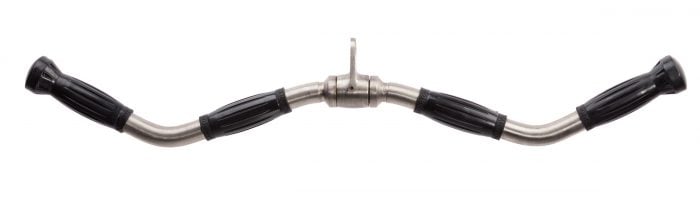
28″ Chrome Curl Bar with Urethane Ergonomic Grips | Revolving
$96.00 -
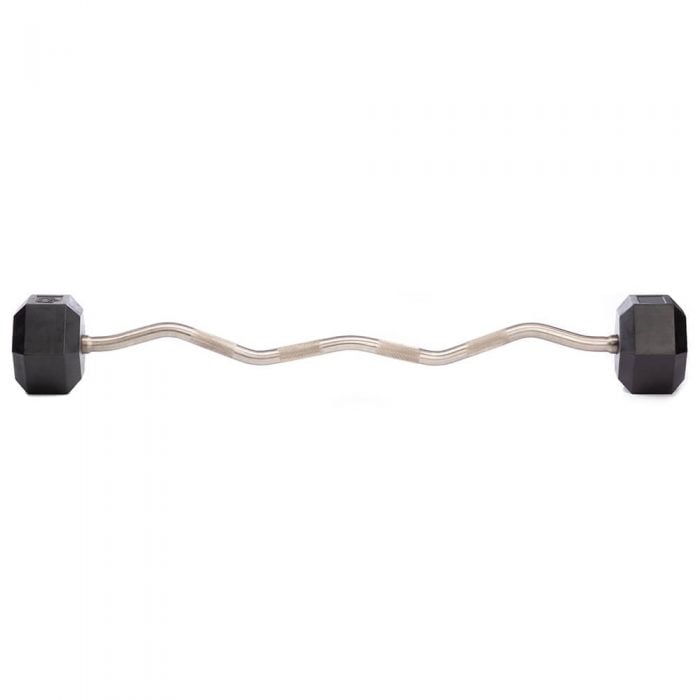
Hampton Fixed Hex Urethane Dura-Barbells |Curl or Straight
Price range: $133.00 through $635.00 -

Hampton Urethane Grip Aerobic Gel-Bar®
Price range: $88.00 through $198.00
Who Benefits Most From Training With A Curl Weight Bar
A curl weight bar is not just for one type of lifter. Its biggest advantage is that it can fit a wide range of training styles, experience levels, and gym environments.
Whether the goal is building muscle, adding variety, or making accessory work feel better from set to set, this bar tends to be most useful for people who want more flexibility in how they train upper-body movements.
Gym-Goers Who Want More Comfortable Arm Training
For many gym-goers, a curl weight bar is simply a better-feeling option for curls, extensions, and other upper-body accessories. Some lifters can use a straight bar without any issue, but others find that the angled grip of a curl bar feels more natural during repeated sets. That can make arm training more comfortable and easier to stick with over time.
It also helps make accessory work more approachable. When a lift feels smoother, it’s often easier to focus on tempo, range of motion, and muscle control instead of just getting through the set.
Home Gym Users Building A More Versatile Setup
Home gym users often have to be selective about what they bring into their space. A curl weight bar makes sense when one piece of equipment needs to support multiple exercises without taking up much room. It can handle biceps work, triceps accessories, forearm training, and a range of upper-body lifts that add variety to a compact setup.
That makes it a strong option for lifters who want more training possibilities without investing in a large collection of specialty bars. In a smaller gym, versatility matters, and a curl weight bar can cover more ground than its name suggests.
Trainers Programming For Clients With Different Comfort Needs
Trainers rarely work with clients who all move the same way or feel the same way under load. A curl weight bar gives them another option when a straight bar is not the best fit for a client’s comfort, coordination, or confidence level. That can be especially useful in accessory work, where the goal is often to build strength and muscle with clean, repeatable reps.
Rather than forcing every client into the same setup, trainers can use a curl weight bar to make movements more manageable while still keeping the training stimulus high. That flexibility is one of the main reasons this bar works so well in coached settings.
Coaches Who Want Simple Accessory Options For Athletes
For coaches, the curl weight bar can be a practical tool for adding upper-body accessory volume without overcomplicating the program. Athletes do not always need endless exercise variation, but they do benefit from tools that let them train supporting muscle groups with good control. A curl bar fits well in that role.
It can be used for arm work, grip-related accessories, and supplemental upper-body lifts that support bigger compound movements. In team, school, or private training settings, it gives coaches a straightforward way to expand accessory options while keeping workouts organized and efficient.
Lifters Who Want More Variety Without Abandoning Core Barbell Work
Some lifters do not want to replace straight-bar training. They just want another useful option for the parts of the program where a different bar makes sense.
That’s where a curl weight bar fits best. It is not a replacement for every barbell movement, but it can be a valuable complement when the goal is better upper-body accessory work.
For lifters who already rely on standard barbells, dumbbells, and plates, adding a curl weight bar can make training feel more complete. It creates more room for exercise variation while still keeping the program grounded in familiar, effective movements.
Best Exercises To Do With A Curl Weight Bar
A curl weight bar works best when it is used for movements that benefit from a more natural grip and controlled bar path. It is not just a bar for doing standard curls and putting back on the rack. In the right hands, it can support a wide range of upper-body accessory work that builds muscle, adds training variety, and helps lifters stay more consistent with the movements they want to keep in rotation.
Standing Curl Variations
Standing curls are the most familiar use for a curl weight bar, and for good reason. The angled grip can help many lifters settle into a hand position that feels smoother than a straight bar, especially during repeated sets.
Standard curls, close-grip curls, and wide-grip curls all work well here, depending on whether the goal is overall arm training or a slightly different feel from set to set.
This is also where the bar shines for controlled hypertrophy work. Instead of turning every set into a cheat curl, lifters can use the bar to keep the movement more deliberate and spend more time under tension.
Reverse Curls
Reverse curls are one of the most useful exercises for bringing the forearms and brachialis into a program. A curl weight bar gives lifters a practical way to load this movement while keeping the bar easier to control through the rep. For gym-goers and athletes alike, that makes reverse curls a smart addition when the goal is more complete upper-arm development rather than biceps work alone.
They also pair well with pulling days and grip-focused accessory sessions, making them a strong option in a well-rounded routine.
Skull Crushers
Skull crushers are another strong use case for a curl weight bar, particularly for lifters who do not love how a straight bar feels during triceps extensions. The grip angle can make the setup feel more manageable and allow the lifter to focus on controlled elbow movement instead of fighting the position of the hands.
As an accessory lift, this makes skull crushers a valuable option after benching or shoulder pressing, when the goal is to add direct triceps work without needing a complicated setup.
Close-Grip Extensions And Accessory Pressing Work
A curl weight bar can also work well for close-grip extensions and other upper-body assistance lifts where a different grip position improves comfort and control. These movements are not about chasing maximum load. They are about reinforcing muscle engagement and getting more quality reps in supporting work.
For trainers and coaches, this can be especially helpful when programming for clients who need simple, effective accessory options that do not feel overly technical.
High-Rep Finishers And Hypertrophy Work
One of the most practical ways to use a curl weight bar is in higher-rep accessory sets at the end of a session. Curls, reverse curls, and triceps extensions all fit well here because the bar supports controlled reps without making the movement feel unnecessarily rigid. That matters most in hypertrophy work, where consistency and muscle tension often matter more than the amount of weight on the bar.
In this role, a curl weight bar becomes less of a specialty item and more of a reliable tool for adding productive upper-body volume to the training week.
Final Thoughts
A curl weight bar earns its place when the situation calls for it.
Not because it replaces a straight bar, but because it handles specific jobs better. Wrist comfort on high-rep sets, better control for accessory triceps work, a more natural grip for reverse curls, and the flexibility a compact home gym needs from a single piece of equipment.
Those are real problems it solves in real programs.
If you’ve been working around a straight bar in spots where a curl bar would fit better, that’s worth fixing.
Hampton Fitness builds curl bars for both home and commercial setups designed for the kind of consistent, practical use that accessory training actually demands. Browse the full bar lineup and find the option that fills the gaps in your current setup.