




Most facilities spec the machine and forget the interface.
The functional trainer gets chosen carefully. The selectorized stack gets installed level and dialed in. The cable crossover lands in a prime spot on the floor.
Then the attachments? Whatever shipped in the box gets clipped to the carabiner, and the lineup never gets a second thought.
That’s backward.
A member never feels the weight stack. They feel the handle. The bar. The rope. The attachment is the single point of contact between a person and several thousand dollars of equipment, and it controls the grip, the bar path, the range of motion, and which muscles actually get loaded.
It’s also the fastest-wearing, highest-touch component on the entire machine. It gets gripped, dropped, swung, sweated on, and disinfected dozens of times a day. When the attachment is wrong, worn, or missing, the machine behind it is only doing part of its job.
This guide is for the operator, facility manager, strength coach, or serious home builder who wants every cable station on the floor pulling its weight. We’ll cover what cable machine attachments actually do, which machines they fit and where compatibility matters, which pieces earn their place on a commercial floor, and how to specify a lineup once instead of replacing it on a 14-month cycle.
What Are Cable Machine Attachments, And Why Do They Decide What Your Machines Can Actually Do?
Cable machine attachments are the bars, handles, ropes, and grips you connect to a cable pulley, functional trainer, or selectorized machine to turn the stack’s resistance into a usable rep. The category covers lat bars, straight and angled press-down bars, V-bars, multi-grip and pro-style bars, seated row bars, stirrup handles, ergonomic singles, rotating handles, ankle straps, and specialty pieces built for specific movements.
They matter because the attachment is the user interface for the entire cable system. A premium dual-pulley functional trainer fitted with a cracked rope and a bent V-bar trains exactly like a budget machine fitted with the same worn parts. The capability you paid for lives in the stack, the pulleys, and the frame, but it only reaches the member through whatever is clipped to the cable.
Change the attachment and you change the exercise. A neutral-grip bar puts the lats and elbows in a different position than a wide pronated bar. A rope lets the hands split at the bottom of a press-down for a fuller contraction than a fixed bar allows. A single ergonomic handle opens up unilateral and rotational work that a straight bar can’t touch. The machine is the engine. The attachment lineup is the gearbox.
In a commercial setting, that becomes an operational issue, not just a programming one. Attachments are the components that wear out first and get noticed first. A weak link in the lineup quietly compromises the most expensive piece of equipment it’s clipped to.
Key Takeaway: A cable machine is only as capable as what’s clipped to it.
Which Cable Machines Are These Attachments Built For — And Does Compatibility Actually Matter?
Most quality attachments connect through a standard carabiner or snap-hook to any cable that ends in a compatible fitting, which makes them broadly cross-compatible across the machines you’ll find on a commercial floor:
- Functional trainers and dual-adjustable pulleys — the most attachment-dependent machines on the floor, since their entire value is the range of movements a single frame can run.
- Selectorized single stations — lat pulldowns, seated rows, triceps stations, and cable columns that often ship with one or two bars and benefit most from a fuller lineup.
- Cable crossover and cable column machines — high-traffic stations where handles and ropes get the heaviest rotation.
- Plate-loaded cable stations and rack-mounted pulleys — cable systems bolted to a rig or power rack, where loading speed and quick attachment swaps matter. Because of that shared connection standard, a well-built attachment usually works across most of your machines. But compatibility has nuances that decide whether a station actually performs:
- Bar length versus machine width. A 48-inch lat bar that’s perfect on a tall single-station pulldown can foul the uprights of a narrow functional trainer. Match bar length to the machine’s frame and cable spacing.
- Connection and swivel clearance. Carabiner gate size and swivel length affect how cleanly an attachment hangs and rotates. Too little clearance and the piece binds or sits at an angle under load.
- Pulley height and cable travel. A high single pulley favors press-downs and pulldowns; a low pulley favors curls, rows, and ankle-strap work. The same lineup serves different movements depending on where the cable originates.
- The takeaway for buyers is simple: you rarely need machine-specific attachments, but you do need to match the attachment’s length, connection, and rotation to the machine and the movement you’re programming. Buying a coordinated lineup from one manufacturer is the cleanest way to guarantee that consistency across every station.
- Key Takeaway: Most attachments are cross-compatible, but matching length, connection, and swivel to each machine is what makes a station actually work.
Which Cable Machine Attachments Actually Earn Their Place On A Commercial Floor?
The attachments worth buying are the ones that unlock real programming across the four core categories of cable work: pulling, pressing, isolation, and accessory. The exact piece count matters far less than making sure every category is covered with builds that survive daily use.
Pulling And Back Work
These are the workhorses of any back day and the most-used bars on most pulldown and row stations.
- Standard lat bar (around 48 inches): the default for wide-grip pulldowns, hitting the lats and upper back through familiar patterns.
- Pro-style lat bar (around 24 inches): a tighter grip that pulls the elbows closer to the midline for more direct lat work.
- Multi-grip or neutral-grip bars: supinated, pronated, and neutral hand positions in one piece, essential for programming variety and wrist comfort.
- Seated row or chinning bar: supports rowing patterns on a low pulley and assisted chin variations on a high one.
Pressing And Triceps
This category gets hammered in any commercial setting and tends to wear the fastest, which makes build quality non-negotiable here.
- Straight cable bar (around 20 inches): the foundation for triceps press-downs, standing curls, and upright pressing.
- V-bar or angled press-down bar: shifts the wrist angle for triceps work and is usually more comfortable than a straight bar under heavy loads.
- Press-down rope, double grip: lets the hands split at the bottom for a fuller triceps contraction and doubles as a face-pull tool for the rear delts.
- Full-extension bar: extra reach for overhead triceps extensions and longer pulling arcs.
Isolation And Unilateral Work
This is where most factory kits fall short, and where a complete lineup separates a serious cable station from a basic one.
- Deluxe stirrup handles: the default single handle for cable curls, crossovers, and one-arm pulls.
- 6-inch single ergonomic handle: a compact grip with better mechanics for crossovers and isolation work, and a more comfortable hold for clients with wrist issues.
- Palm grip handle: a grip orientation that opens up rotational and pressing isolation patterns most kits never accommodate.
- Dual-action chain stirrup: a chain swivel that reduces joint stress on high-rep accessory work.
Specialty And Accessory
These round out a complete library and support rehab, mobility, and lower-body cable work.
- Hammer rope, single grip: a dedicated rope for hammer-pattern curls and forearm work.
- Revolving curl bars with ergonomic grips: full-rotation bars for biceps and forearm work that don’t lock up the wrist.
- Ankle straps: essential for kickbacks, hip abduction, and any lower-body cable work, and almost always missing from generic kits.
A complete commercial-grade lineup typically runs 14 to 16 pieces. Hampton’s Machine Bar Attachment Club Pack, for example, packages 15 urethane-gripped attachments that cover all four categories with consistent finish, grip ergonomics, and connection hardware, plus a vertical tower rack to keep them organized at the station.
Key Takeaway: A complete lineup isn’t about piece count — it’s whether all four categories are covered with attachments built to last.
What Separates A Commercial-Grade Cable Machine Attachment From A Budget One?
Five things separate a commercial-grade attachment from a disposable one: grip material, core construction, rotation hardware, connection-point integrity, and knurling. All five compound over time, which is why the price gap on day one looks bigger than it does across a five-year operating window.
Grip Material: Urethane vs. Rubber
This is the single biggest durability differentiator. Rubber-coated grips are porous, so they absorb sweat, skin oils, and cleaning chemicals. Over time the rubber swells, cracks, and starts separating from the steel core, and once the grip spins on the shaft, the attachment is finished. Urethane is non-porous: it doesn’t swell, doesn’t hold odor, and doesn’t break down under standard cleaning. It’s the same material logic that makes urethane the right call for commercial dumbbells — higher upfront cost, dramatically lower replacement frequency.
Core Construction
Solid chrome steel cores hold up under heavy load and repeated drops. Hollow or stamped construction flexes under tension and bends over time, which throws off the bar path and creates a safety issue. On bar attachments, welded connection points are non-negotiable; bolted-on hardware works loose.
Rotation Hardware
Revolving bars and rotating handles need real bushings to spin smoothly under load. A bronze bushing with a roll-pinned sleeve keeps rotation consistent for years and never works loose. Cheap rotating attachments rely on plastic bushings or bare metal-on-metal contact, both of which wear out fast and start to grind.
Connection-Point Integrity
The eyelet or carabiner is where the entire load transfers from the cable to the attachment. A machined eyelet welded into the steel core handles that load indefinitely. Stamped or bolted connection hardware develops play, then fails under tension. This is the most common failure point on budget attachments and the one most likely to cause injury when it lets go mid-rep.
Knurling And Grip Ergonomics
Knurling has to provide grip without shredding hands. Too aggressive and high-rep sets become miserable; too smooth and the grip slips under sweat. Quality pieces use medium knurling on chrome bars and textured urethane on coated grips. That durability matters more than ever as training shifts toward cable and functional work: functional fitness training ranked #10 on the ACSM 2026 Worldwide Fitness Trends survey, up from #12 the year before, and has placed in the top 20 every year since 2007. Cable machines and functional trainers sit right at the center of that demand.
Key Takeaway: The right attachment doesn’t just feel better — it costs less per year of use over a typical commercial replacement cycle.
Recommended products
-
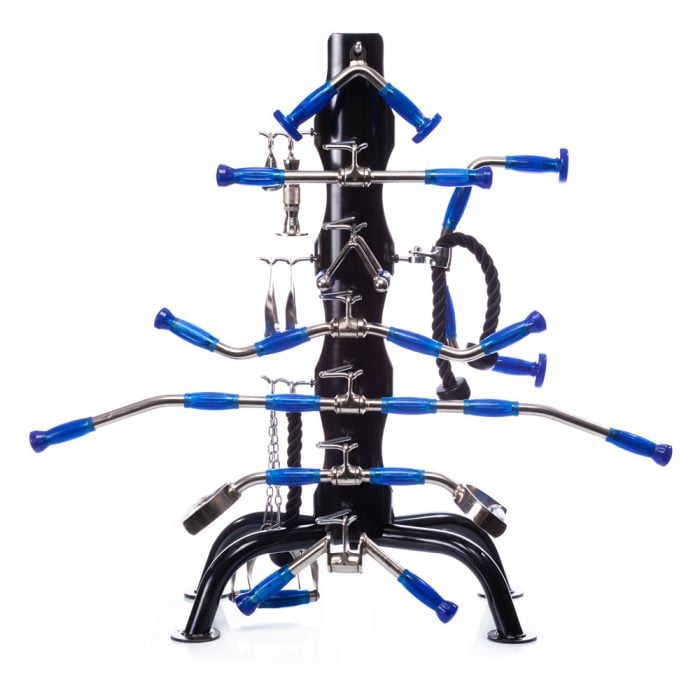
Machine Attachment Bar | BLUE | SET
$1,117.00 -
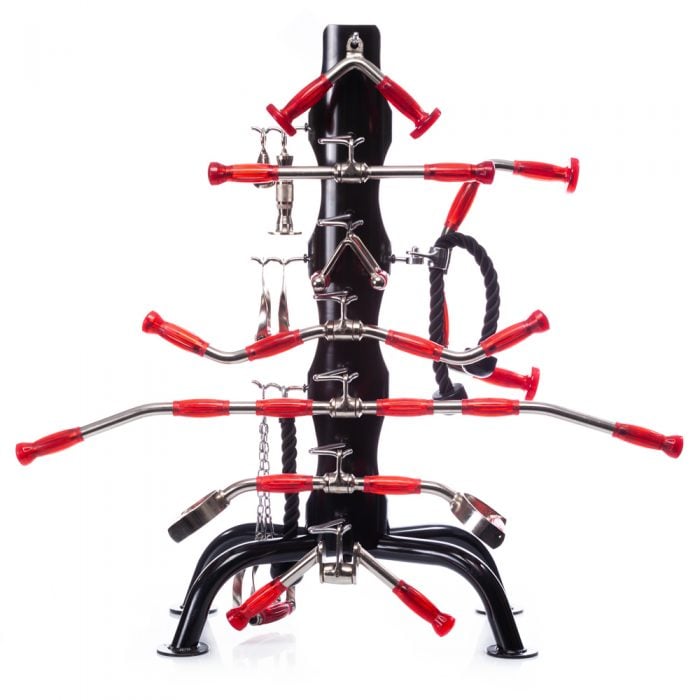
Machine Attachment Bar | RED | SET
$1,117.00 -

Machine Attachment Bar Pack | BLACK
$1,766.00
How Should You Build A Cable Machine Attachment Package For Your Facility?
The right package depends on what kind of facility you’re outfitting, who trains there, and what your machines are. Buying as a coordinated set matters more than people expect, because it locks in consistent finish, ergonomics, and connection compatibility across every station instead of leaving you with a drawer of mismatched parts.
Commercial Gym (High-Traffic, Mixed Membership)
Go with a full 14-to-16-piece package covering all four categories. A diverse membership needs ergonomic options, multi-grip bars for wrist comfort, and enough singles to support unilateral programming. Hampton’s Machine Bar Attachment Club Pack is built for exactly this profile, with consistent connection hardware and a 5-year warranty on the urethane coating.
Boutique Studio Or Small-Group Training
Focus on a curated 8-to-10-piece lineup that leans on ergonomic singles, ropes, and a versatile multi-grip bar. In a premium-priced space, a consistent urethane finish across attachments does more for the member experience than raw piece count. Members notice worn, mismatched parts faster than almost anything else on the floor.
Collegiate Or Athletic Performance Facility
Weight the lineup toward pulling variety and durability: multi-grip and neutral-grip bars, seated row bars, and a strong set of singles for sport-specific work. Athletes load attachments harder and re-rack with less care, so connection-point integrity and grip material matter even more here.
Serious Home Gym
A focused 5-to-7-piece set covers the major movement patterns for one user or a small household: a lat bar, a press-down rope, a V-bar, a pair of stirrup handles, and at least one ergonomic single. The attachments will outlive the cable stack itself, so spec them like infrastructure rather than accessories.
Key Takeaway: The right package matches your facility, your members, and your programming — piece count is a secondary consideration.
Where Should Cable Machine Attachments Live — And How Do You Keep Them Performing?
Two things keep a lineup performing for years instead of months: smart storage at the machine, and a simple maintenance habit. Both cost almost nothing and both get skipped constantly.
Storage At The Station
Attachments left on the floor get stepped on, kicked, and lost. A vertical tower rack sited next to each cable station keeps every piece accessible, off the floor, and visibly organized. A clean attachment rack also signals operational discipline, which carries more weight with members and prospects than most operators realize.
Wipe-Downs
Urethane handles take standard gym disinfectant without breaking down, so a quick wipe with a microfiber cloth between users is enough. Rubber grips are more sensitive and need gentler cleaners, which adds supply cost and complexity over time.
Weekly Inspection
Walk the cable stations once a week and check each attachment for the failure points that matter: rope fraying near the stoppers, grip slippage on the steel core, play in the connection eyelet, and rotation issues on revolving bars. Anything compromised gets pulled immediately rather than left for a member to discover mid-set.
Retire vs. Repair
Some attachments can be repaired: a worn carabiner can be swapped, knurling can be cleaned. Frayed ropes and cracked grips are immediate retirements. There’s no fix for a torn coating that justifies the safety risk of leaving it clipped to a machine.
Key Takeaway: Properly specified and stored attachments should outlast the machines they’re clipped to.
Who Should Be Upgrading Their Cable Machine Attachments Right Now?
Anyone whose attachments have started showing wear that members notice: peeling rubber grips, frayed ropes, bent bars, sluggish rotation, or a lineup missing the ergonomic and unilateral pieces trainers actually want to program with.
Commercial Gym Operators
If your free-weight area is dialed in but your cable attachments look beat up, you’re losing the member-experience battle on the part of the floor people interact with most. Worn handles read as a low-investment facility no matter how good the machines behind them are.
Boutique Studio Owners
Faded ropes and cracked grips cheapen the whole experience in a premium-priced studio. A consistent urethane lineup across cable stations supports the brand far more than most operators realize.
Strength Coaches And Athletic Directors
Programming variety depends entirely on what’s clipped to the stack. If athletes are running the same three cable movements every week because nothing else is in working order, the attachment lineup is the bottleneck, not the machine.
Trainers And Physical Therapists
Ergonomic singles, ankle straps, and palm-grip handles unlock rehab, prehab, and unilateral work that generic kits don’t accommodate. If sessions keep defaulting to a stirrup handle for movements better suited to a 6-inch ergonomic single, the kit is incomplete.
Home Gym Builders In For The Long Haul
Attachments routinely outlive the cable stack itself. Specify them like infrastructure and they’ll pay off across years of training, instead of cycling through rubber-grip replacements every couple of years.
Key Takeaway: If your attachments limit what trainers can program or what members feel comfortable using, the upgrade is overdue.
Why Does Hampton Fitness Build Cable Machine Attachments Differently?
Because Hampton has been building free-weight infrastructure for commercial facilities for nearly 30 years, and the engineering principles behind its urethane dumbbells apply just as directly to what clips onto a cable.
Here’s what that looks like in the product:
- Urethane Gel-Grip handles with a 5-year warranty on the non-porous coating — no swelling, no tearing, no separation from the steel core.
- Solid chrome steel construction on bar attachments, with welded connection points and machined eyelets built for repeated heavy load.
- Bronze bushing rotation systems on revolving bars, with roll-pinned sleeves that won’t work loose under daily commercial use.
- Universal connection compatibility with most selectorized machines and functional trainers, so one lineup serves the whole floor.
- Available individually or as the 15-piece Machine Bar Attachment Club Pack with a matched vertical tower rack — enough to outfit a cable station or functional trainer in a single purchase, with consistent finish and ergonomics across every piece.
Hampton is headquartered in Ventura, California, and ships to commercial gyms, boutique studios, collegiate programs, military installations, and serious home gyms across the country, selling direct and through a national dealer network.
Final Thoughts: Stop Clipping On Whatever’s In The Box. Start Specifying For The Machine.
Cable machine attachments are the most-touched and least-respected part of the cable system. Every rep your members perform passes through whatever’s hanging on the carabiner.
When the lineup is right, every machine on the floor reaches its full range, training feels consistent, and trainers program with confidence. When it’s wrong, your most expensive cable equipment quietly underperforms, and the attachment becomes a steady drain on your replacement budget and your member experience.
The fix isn’t another generic 10-piece kit. It’s specifying the right attachments once, in the right materials, matched to the machines you actually own, from a manufacturer that treats attachments like infrastructure instead of accessories.
Explore the full Hampton machine attachment lineup, or contact Hampton directly for facility-level consultation and a custom quote.
Hampton Fitness builds cable machine attachments for commercial gyms, boutique studios, collegiate programs, and serious home gyms — individually or as complete club packs, engineered to match every machine on your floor and built to outlast the stack they’re clipped to.